

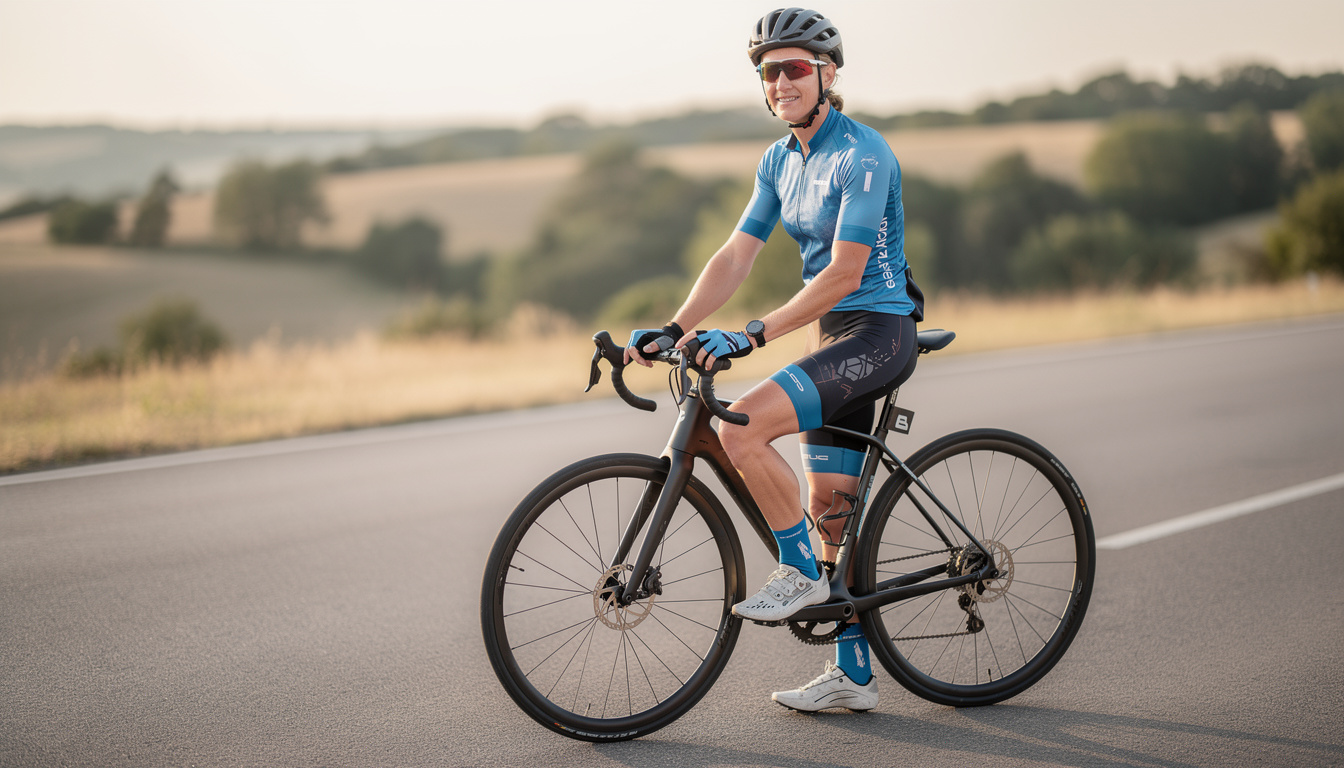
A Cyclist hunched over a bike with a tape measure might look like a small scene, but in Ultra Cycling, tiny changes can unlock huge gains. A 2 mm fit tweak on a frame can mean cleaner power transfer, fewer hot spots, and less wasted motion—details that start to matter when the goal is an Hour Record-style effort sustained all day.
That obsessive precision helped Matthew Lefthand—an Utah-based therapist known as “Lefty”—push a jaw-dropping 612.38 Miles in a 24-hour time-trial format at Bike Sebring in Florida. The result: a modern case study in Endurance, fueling strategy, and the psychology of a true Athlete chasing Record Breaking performance.
Cyclist 24-hour Hour Record effort: why 612 Miles matters
In the world of Distance racing, a 24-hour ride sits in a special category: it’s not a sprint, not a stage race, and not a casual century. It’s a controlled experiment in physiology and decision-making, where every minute off the bike and every missed sip compounds over time.
Race organizers noted that this was the first time, in an organized event, that anyone surpassed 600 Miles on an unfaired two-wheeled bike—meaning no aerodynamic shell or fairing cutting through the air. That makes the number more than a headline; it becomes a benchmark for what humans can sustain when aerodynamics, pacing, and nutrition align.
The next question practically asks itself: what’s the real engine behind a day-long Challenge—legs, lungs, or mindset?
Ultra Cycling context: records, formats, and the 600-mile barrier
Historically, ultracycling roots trace back to late-19th and early-20th century France, then gained U.S. momentum with events like Race Across America in the early 1980s. Today, many governing definitions describe Ultra Cycling as a single effort beyond roughly 125 miles or six hours, though most prominent events stretch far longer.
For perspective, the men’s world best-known 24-hour distance mark is 637.66 miles, set by Austrian rider Christoph Strasser on a closed-loop air base track in 2021 using a time-trial bike with aerobars. Lefthand’s 612+ performance doesn’t erase that figure, but it tightens the conversation—and it signals that the next leap might come from execution rather than “superhuman” talent alone.
At this level, “record” isn’t a single day of brilliance; it’s repeatable systems stacked over months.
Endurance and Physical Fitness: the body behind Record Breaking Miles
Six years before the Sebring breakthrough, Lefthand carried about 270 pounds on a 6-foot-1 frame. The transformation wasn’t framed as vanity; it came from wanting an active family life, especially after parenthood entered the picture around 2020.
A structured eating plan and marathon training drove a massive change: roughly 100 pounds lost by the time he ran the St. George Marathon in 2021. Fitness surged—weekly running volume reportedly reached 70–80 miles—until predictable overuse injuries (ankle and knee) forced a pause and a mental crash that many endurance athletes recognize.
The pivot arrived in the most ordinary way: a stored mountain bike in the garage, a two-hour spin on farm roads, and a realization that cycling delivered intensity without the same impact pain. The insight is simple but powerful: the right sport can make consistency feel possible again.
From running injuries to Ultra Cycling: a practical pathway for athletes
Many athletes assume they need a perfect multi-year plan to enter endurance cycling. Lefthand’s arc suggests a different model: build basic volume quickly, learn through uncomfortable mistakes, then refine the details like a scientist.
Early on, he jumped into a 100-mile ride without realizing it was a milestone for most recreational riders. Soon after came LoToJa—the 208-mile ride from Logan, Utah, to Jackson, Wyoming—typically a months-long preparation goal. With minimal group-riding experience, he rode mostly alone, paid a steep price for electrolyte mismanagement, and still returned the next year to cut roughly two hours off his time by learning pacing, drafting culture, and fueling basics.
That sequence—try, fail, analyze, repeat—is a realistic blueprint for long-term Physical Fitness progress.
Ultra Cycling training systems: 25 hours weekly and the mental math
Over roughly three years, training volume reportedly stabilized around 25 hours per week, much of it on Zwift. The setting sounds mundane—a garage room with bikes hanging overhead and worn kit on concrete walls—but the routine is anything but casual.
Crashes and broken collarbones didn’t end the project, which hints at the real differentiator: psychological comfort with monotony. Long races demand a mind that can stay calm while doing repeated calculations—speed, intake, lap averages, and “what’s next?”—without spiraling into anxiety.
As a helpful mental model, imagine a fictional rider, Nora, training for her first 12-hour event in 2026. She doesn’t need heroic genetics; she needs a system: controlled pacing, a gut that can tolerate steady calories, and a mind that stays constructive at hour eight when the body argues to stop. That’s the same framework scaled up for 24 hours.
Key habits that translate to healthier daily life
Ultra training can look extreme, but several pillars are surprisingly transferable to everyday wellbeing: consistent sleep routines, meal planning, and stress management. Those pillars also echo what many lifestyle researchers call “keystone habits,” because one good habit tends to pull others into place.
For readers who want the health side without racing, exploring keystone habits for better health offers a grounded starting point. Another useful lens is how daily movement and nutrition patterns shape long-term resilience, as discussed in wellness and healthy living.
The insight is clear: the same consistency that produces big Distance numbers can also build durable health outcomes.
Nutrition for a 24-hour Challenge: calories, electrolytes, caffeine timing
One of the most educational elements of this Record Breaking ride is how deliberately the body was fueled. During the 24-hour effort, Lefthand reportedly consumed about 700 calories per hour, primarily in liquid form—no solid food—because digestion reliability often beats variety when intensity stays high.
Caffeine was treated like a tool, not a habit: it was reportedly reduced for about 10 days pre-race, then reintroduced during the overnight hours in measured doses every few hours. The logic is straightforward: protect sensitivity, then use it when alertness becomes a limiting factor.
Electrolytes and the “auto-quit trigger”
Ultra events expose a brain’s built-in safety mechanism—the “auto-quit trigger.” The trigger can show up as overwhelming sleepiness, sudden nausea, or the certainty that stopping is rational. Often, it’s not willpower that fixes it but problem-solving: sodium intake, carbohydrate timing, cooling strategies, or micro-adjustments to posture.
That’s why electrolytes aren’t a footnote. In his earlier LoToJa experience, poor electrolyte strategy led to severe cramps later that night—an unforgettable lesson that many endurance athletes learn once and never repeat.
When nutrition becomes non-negotiable rather than “optional,” performance gets more predictable.
| Race variable | What was done | Why it matters for Endurance |
|---|---|---|
| Calories | ~700 kcal/hour, mostly liquid | Reduces GI risk while sustaining steady energy output over long Miles |
| Electrolytes | Planned intake to prevent cramping | Supports nerve conduction, hydration balance, and muscular function under fatigue |
| Caffeine | Reduced pre-race, used overnight in doses | Helps alertness when sleep is not an option during an Hour Record-type push |
| Time off bike | Only ~14 minutes total stops | Minimizes average-speed loss; small stoppages balloon across 24 hours |
Cruzbike recumbent strategy: aerodynamics, comfort, and speed for Distance records
Switching bike types late in a career can be risky, but it can also unlock efficiency. Lefthand moved to a Cruzbike V20c, a front-wheel-drive recumbent often marketed for speed, after being approached by the brand. The pitch was practical: increased comfort, reduced strain, and potentially improved aerodynamics versus an upright position.
The learning curve was steep—balancing and handling differ from standard bikes—so the process became iterative: trial rides, small fit changes, and repeated fine-tuning. That’s where the “every millimeter matters” approach becomes more than a slogan; it becomes a measurable performance lever.
When 1–2 mm decides the day
About six hours into the Sebring effort, foot arch pain appeared, followed by calf and knee cramping. The likely cause was a cleat position slightly off—just 1–2 mm—which is enough to change joint angles and overload tissue when the pedal stroke repeats tens of thousands of times.
After messaging with his crew, it turned out the needed parts weren’t on hand. Other racers stepped in with a “pit crew” style pedal swap while shoes were changed, limiting total stoppage time across the full day to around 14 minutes.
The lesson for any Athlete: in ultra events, preparation means packing solutions for small problems because small problems never stay small.
Bike-life balance: family, work stress, and sustainable Challenge planning
Ultra performance doesn’t happen in a vacuum. Lefthand’s schedule had to fit a therapy practice, marriage, and parenting two young children, which pushed many training rides to early mornings or late nights.
That duality—supporting clients emotionally, then shifting into extreme physical goals—creates a unique stress load. In 2026, it also mirrors a broader health conversation: how to pursue ambitious goals without sacrificing long-term wellbeing.
Readers interested in the broader “healthy life” framework that supports consistency may find useful context in healthy life secrets that actually stick and a deeper look at diet and exercise habits linked to longevity.
A practical checklist for a first ultra-style day
Not everyone needs to chase 600+ Miles, but many cyclists want a first 6-, 8-, or 12-hour ride. The following list keeps the focus on controllables that most often decide whether the day feels empowering or chaotic.
- Bike fit audit: confirm saddle/cleat/handlebar or recumbent contact points; resolve numbness early.
- Fuel plan on paper: set hourly targets for carbs, fluids, and sodium; practice it in training.
- Stop strategy: plan bottle swaps and bathroom timing; “quick breaks” can quietly destroy average speed.
- Night preparation: if riding late, decide caffeine timing and lighting setup before the event.
- Mental scripts: pre-write responses to predictable lows (cramps, boredom, doubt) to beat the auto-quit trigger.
A long ride becomes less intimidating when it’s treated like a sequence of solvable hours.
Record Breaking day at Sebring: pacing, laps, and the final surge
The Sebring course is a 3.66-mile loop, and the record required relentless repetition—about 167 laps. This format reduces variables like navigation and traffic, but it amplifies the mental grind: the same turns, the same landmarks, the same temptation to back off.
Even without taking the overall world best, the final statistics are startling: roughly 612.37 miles at an average near 25.5 mph, with the last full lap reportedly the fastest of the day at about 28.4 mph. That closing speed matters because it suggests something teachable: late-race performance is often a sign of good fueling and disciplined pacing earlier, not just toughness at the end.
And perhaps the most revealing moment was internal negotiation: when pain arrived and the math suggested settling for a lower number, the target of 600 stayed close enough to keep the pedals turning. That is what a true Challenge looks like—one decision, then another, until the clock runs out.
How is Ultra Cycling defined in practical terms?
Ultra Cycling generally refers to a single continuous ride beyond about 125 miles or six hours. In reality, many popular ultra events go much longer, and the defining feature is sustaining effort, fueling, and focus across an extended Distance.
Why does a 1–2 mm cleat or fit change matter so much?
Over thousands of pedal strokes, tiny alignment errors can change joint tracking and load distribution. That can trigger arch pain, calf tightness, or knee irritation, which becomes performance-limiting during an Hour Record-style day.
What made the 612 Miles performance especially notable?
It surpassed 600 miles on an unfaired two-wheeled bike in a race setting, meaning there was no aerodynamic shell aiding speed. That keeps the focus on Endurance, pacing, aerodynamics, and nutrition execution rather than equipment alone.
What’s a realistic fueling principle for long rides?
Set hourly targets and practice them in training so the gut adapts. Many endurance cyclists prioritize steady carbohydrates, planned electrolytes, and fluids; consistency is more important than novelty when the goal is stable energy over long Miles.
How can everyday riders use lessons from a Record Breaking athlete?
Treat training as a system: keystone habits, a simple nutrition plan, and measurable pacing. Even without racing, these tools support Physical Fitness and make big personal Challenges feel manageable.