

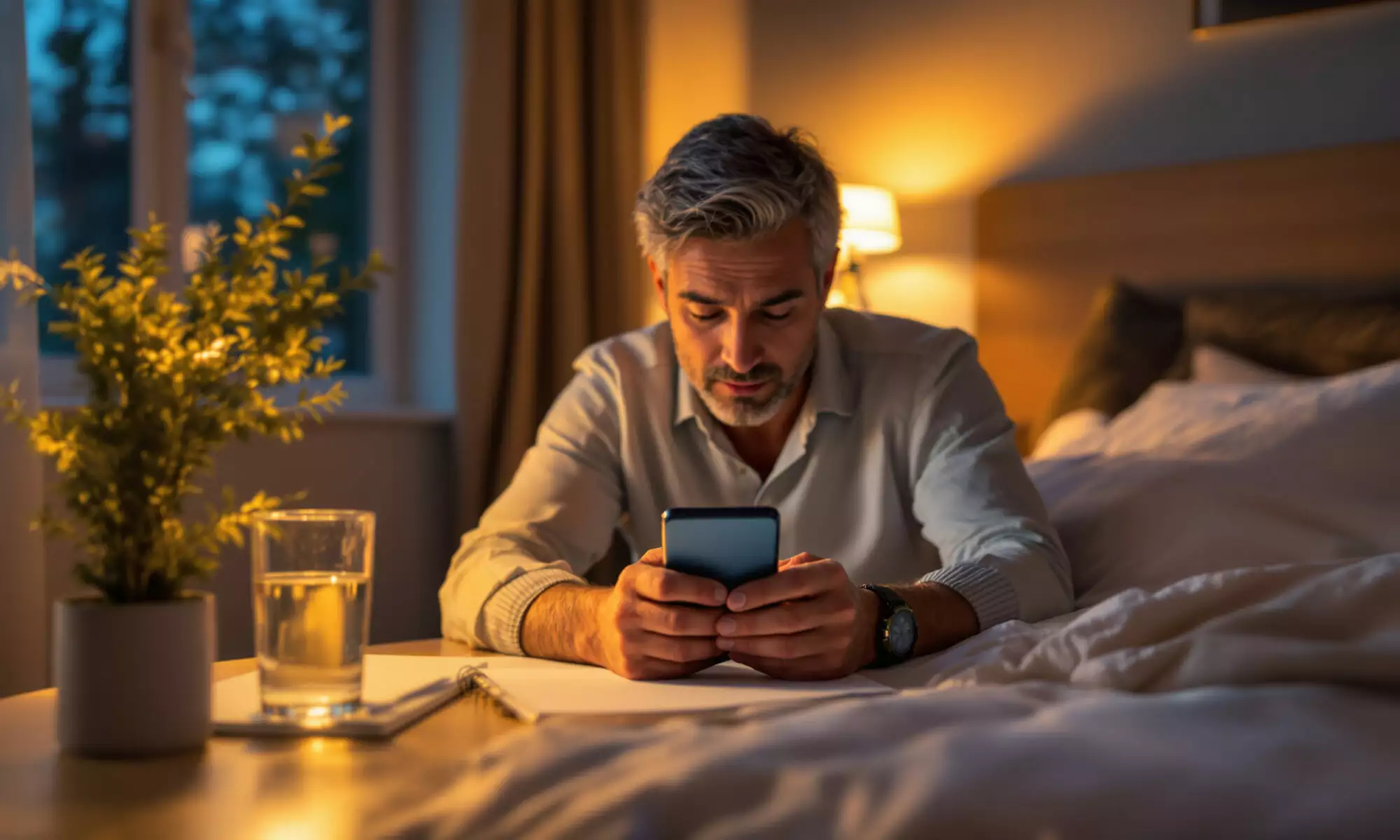
Sleep and mental health affect each other in both directions: poor sleep can raise the risk of anxiety, depression, irritability, and worse stress control, while mental health symptoms can make sleep harder. The most useful first move is boring but powerful: set a steady wake time, protect light exposure, cut late caffeine, and treat persistent insomnia as a health issue, not a character flaw.
Sleep and mental health: the two-way link
The relationship between sleep and mental health is not just about feeling tired after a bad night. Sleep helps regulate emotion, attention, threat response, appetite hormones, and the body’s stress system. When sleep becomes short, broken, or poorly timed, your brain has less room to recover.
Population studies consistently find higher rates of anxiety and depression among people with insomnia, short sleep, or irregular sleep timing. These are mostly observational findings, so they can’t prove that poor sleep causes every mood problem. Still, the pattern is strong, repeated across countries, and biologically plausible.
Clinical evidence adds a sharper point. Cognitive behavioral therapy for insomnia, known as CBT-I, improves sleep and can also reduce depression and anxiety symptoms in many adults, according to systematic reviews published in the 2010s and early 2020s. That doesn’t mean sleep treatment replaces mental health care. It means sleep is often one of the most practical places to start.
If you’re dealing with panic attacks, severe depression, thoughts of self-harm, trauma symptoms, bipolar disorder, pregnancy-related mood changes, or medication questions, speak with a qualified clinician. Sleep habits can help, but they shouldn’t be used as a substitute for care when symptoms are significant.
How much sleep do you actually need?
Most adults need 7 to 9 hours of sleep a night, according to the National Sleep Foundation’s 2015 age-based recommendations and similar guidance from the CDC. Some people function well at the lower end. Very few adults truly thrive on 5 hours.
Here’s the overlooked caveat: time in bed is not the same as sleep time. If you go to bed at 10:30 p.m., wake at 6:30 a.m., but spend 60 minutes awake across the night, you got about 7 hours of sleep, not 8. That simple calculation often explains why someone is “doing everything right” but still feels foggy.
| Age group | Recommended sleep per 24 hours | Source |
|---|---|---|
| Adults 18-64 | 7-9 hours | National Sleep Foundation, 2015 |
| Adults 65+ | 7-8 hours | National Sleep Foundation, 2015 |
| Teenagers 14-17 | 8-10 hours | National Sleep Foundation, 2015 |
| School-age children 6-13 | 9-11 hours | National Sleep Foundation, 2015 |
Sleep quality matters too. A person sleeping 7.5 steady hours may feel better than someone spending 9 hours in bed with frequent awakenings, untreated sleep apnea, alcohol-disrupted sleep, or anxiety-driven early waking. Numbers are a guide, not a verdict.
Build a sleep routine that your brain can predict
The best sleep hygiene advice is not glamorous. Honestly, that’s part of why people underestimate it. Your brain likes cues: light in the morning, darkness at night, regular meals, regular movement, and a bedtime that doesn’t swing wildly between weekdays and weekends.
Start with the wake time. If your sleep and mental health feel out of sync, choose a realistic wake time you can keep within about an hour most days. A steady wake time anchors your body clock more reliably than forcing yourself into bed when you aren’t sleepy.
Morning light is another low-cost tool. Outdoor light in the first hour after waking helps set circadian timing, especially if you spend most of the day indoors. On cloudy days, outdoor light is still usually brighter than indoor lighting.
Caffeine deserves more respect than it gets. Its half-life is often around 5 hours, though it varies by person, pregnancy status, liver metabolism, smoking, and medication use. If you drink coffee at 3 p.m., a meaningful amount may still be active at 8 p.m. For anxious people, that can be the difference between normal alertness and a racing mind.
Late-night scrolling also matters, but not only because of blue light. Social feeds can add comparison, conflict, novelty, and emotional spikes at the exact time your nervous system should be powering down. Our coverage of social media and well-being is relevant here, especially if your bedtime keeps drifting after “just five minutes” online.
What helps when anxiety keeps you awake?
Anxiety and insomnia often travel together. Worry delays sleep, then poor sleep makes worry feel more convincing the next day. The loop is exhausting, but it can be interrupted.
One useful rule: don’t turn the bed into a worry station. If you’ve been awake for roughly 20 to 30 minutes and feel increasingly alert, get up and do something quiet in dim light until sleepiness returns. This is a core idea in CBT-I stimulus control, and it trains your brain to associate bed with sleep rather than frustration.
- Keep a fixed wake time for 2 weeks before judging whether the routine works.
- Move caffeine earlier, ideally stopping 8 hours before bed if you’re sensitive.
- Write tomorrow’s top 3 tasks before bedtime, not while lying in bed.
- Use the bed for sleep and sex, not work emails or conflict-heavy conversations.
- If you nap, keep it under 30 minutes and avoid late afternoon naps.
- Get help if insomnia lasts 3 months or occurs at least 3 nights a week with daytime impairment.
Relaxation techniques can help some people, but they aren’t magic switches. Slow breathing, progressive muscle relaxation, and mindfulness practices have mixed but generally favorable evidence for stress and sleep symptoms. The trick is to practice them during the day first, so they don’t become another bedtime performance test.
For students and young adults, sleep loss often gets normalized as a badge of effort. It shouldn’t. If college stress is part of the problem, our guide to mental health during the transition to college covers pressure, routines, and when to ask for support.
Insomnia, depression, and sleep apnea: signs to take seriously
Not every sleep problem is solved by better habits. Chronic insomnia disorder is generally defined as trouble falling asleep, staying asleep, or waking too early at least 3 nights per week for at least 3 months, with daytime problems. CBT-I is recommended as first-line treatment by major groups including the American College of Physicians in its 2016 guideline.
Depression can show up as early-morning waking, sleeping too much, or feeling unrefreshed no matter how long you sleep. Anxiety often causes trouble falling asleep. Bipolar disorder is different: a reduced need for sleep with unusual energy, impulsivity, or racing thoughts can be a warning sign, not a productivity streak.
Sleep apnea is another missed edge case. Loud snoring, choking or gasping, morning headaches, high blood pressure, and daytime sleepiness can point to breathing interruptions during sleep. It can affect people of many body sizes, although risk rises with age, alcohol use, certain anatomy, and higher weight.
The sleep and mental health connection gets especially complicated when alcohol enters the picture. Alcohol may make you sleepy at first, but it fragments sleep later in the night and can worsen mood and anxiety the next day. For most people, this matters more than buying a perfect pillow.
Burnout can also blur the line between tiredness and low mood. If work stress is draining your sleep, the piece on burnout and self-compassion may help you separate recovery needs from self-blame.
What about melatonin, trackers, and naps?
Melatonin is often marketed as a general sleep aid, but its strongest use is for circadian timing problems, such as delayed sleep-wake phase or jet lag. Evidence for chronic insomnia is less impressive. It can also interact with medications and may not be appropriate for everyone, so it’s worth asking a pharmacist or clinician before regular use.
Wearable sleep trackers can be helpful for spotting patterns, such as a bedtime that keeps slipping or restless nights after alcohol. They are less reliable for diagnosing sleep stages, insomnia, or sleep apnea. If your tracker makes you anxious about getting a perfect score, it may be worsening the problem it’s meant to measure.
Naps are not bad. Timing decides. A short nap of 10 to 30 minutes early in the day can reduce sleepiness without stealing too much pressure from nighttime sleep. Long or late naps, especially after 4 p.m., can make insomnia harder.
Food plays a supporting role. Heavy meals close to bedtime can worsen reflux and discomfort, while going to bed very hungry can also wake you. For broader prevention habits that support mood and heart health, see our practical guide to healthy eating for a stronger heart.
A realistic 7-day reset for better rest
A reset works best when it’s specific. Pick one week when you can avoid major schedule swings. Don’t aim for perfect sleep; aim for clearer signals to your body clock.
On days 1 and 2, set your wake time and get outdoor light soon after waking. On days 3 and 4, move caffeine earlier and reduce evening alcohol if you drink. On days 5 and 6, create a 30-minute wind-down that repeats: dim lights, wash up, set clothes out, read something calm, or listen to quiet audio.
By day 7, check the data that matters: how long it takes to fall asleep, how often you wake, how you feel by late morning, and whether mood swings are less sharp. If the answer is “no change,” that doesn’t mean you’ve failed. It may mean you need CBT-I, mental health support, or evaluation for sleep apnea, restless legs syndrome, medication effects, pain, or thyroid disease.
Sleep and mental health improve most reliably when you treat sleep as a daily rhythm, not a nightly emergency. Small changes done consistently beat dramatic bedtime makeovers that collapse by Wednesday.
FAQ
Can lack of sleep cause anxiety?
Lack of sleep can raise anxiety symptoms and make stress feel harder to manage, based on experimental sleep restriction studies and large observational research. It may not be the only cause, but it can be a major amplifier.
How many hours of sleep do I need for good mental health?
Most adults do best with 7 to 9 hours per night. Some need slightly less or more, but regularly getting under 6 hours is linked with worse mood, attention, and physical health outcomes in population studies.
Is waking up at 3 a.m. a sign of depression?
It can be, especially if it’s paired with low mood, loss of interest, guilt, appetite changes, or daytime impairment. It can also come from alcohol, stress, menopause symptoms, sleep apnea, pain, or an irregular schedule.
Does sleeping more fix depression?
More sleep alone usually doesn’t fix depression, and oversleeping can sometimes be part of the illness. Better sleep can support recovery, but persistent depression deserves proper assessment and treatment.
When should I see a doctor for sleep problems?
Seek help if insomnia lasts 3 months, you feel unsafe or severely depressed, you have loud snoring with gasping, or daytime sleepiness affects driving or work. These are signs that sleep habits alone may not be enough.
{“@context”:”https://schema.org”,”@type”:”FAQPage”,”mainEntity”:[{“@type”:”Question”,”name”:”Can lack of sleep cause anxiety?”,”acceptedAnswer”:{“@type”:”Answer”,”text”:”Lack of sleep can raise anxiety symptoms and make stress feel harder to manage, based on experimental sleep restriction studies and large observational research. It may not be the only cause, but it can be a major amplifier.”}},{“@type”:”Question”,”name”:”How many hours of sleep do I need for good mental health?”,”acceptedAnswer”:{“@type”:”Answer”,”text”:”Most adults do best with 7 to 9 hours per night. Some need slightly less or more, but regularly getting under 6 hours is linked with worse mood, attention, and physical health outcomes in population studies.”}},{“@type”:”Question”,”name”:”Is waking up at 3 a.m. a sign of depression?”,”acceptedAnswer”:{“@type”:”Answer”,”text”:”It can be, especially if it’s paired with low mood, loss of interest, guilt, appetite changes, or daytime impairment. It can also come from alcohol, stress, menopause symptoms, sleep apnea, pain, or an irregular schedule.”}},{“@type”:”Question”,”name”:”Does sleeping more fix depression?”,”acceptedAnswer”:{“@type”:”Answer”,”text”:”More sleep alone usually doesn’t fix depression, and oversleeping can sometimes be part of the illness. Better sleep can support recovery, but persistent depression deserves proper assessment and treatment.”}},{“@type”:”Question”,”name”:”When should I see a doctor for sleep problems?”,”acceptedAnswer”:{“@type”:”Answer”,”text”:”Seek help if insomnia lasts 3 months, you feel unsafe or severely depressed, you have loud snoring with gasping, or daytime sleepiness affects driving or work. These are signs that sleep habits alone may not be enough.”}}],”@id”:”https://www.healthylifevitality.com/?p=2604/#faq”}