

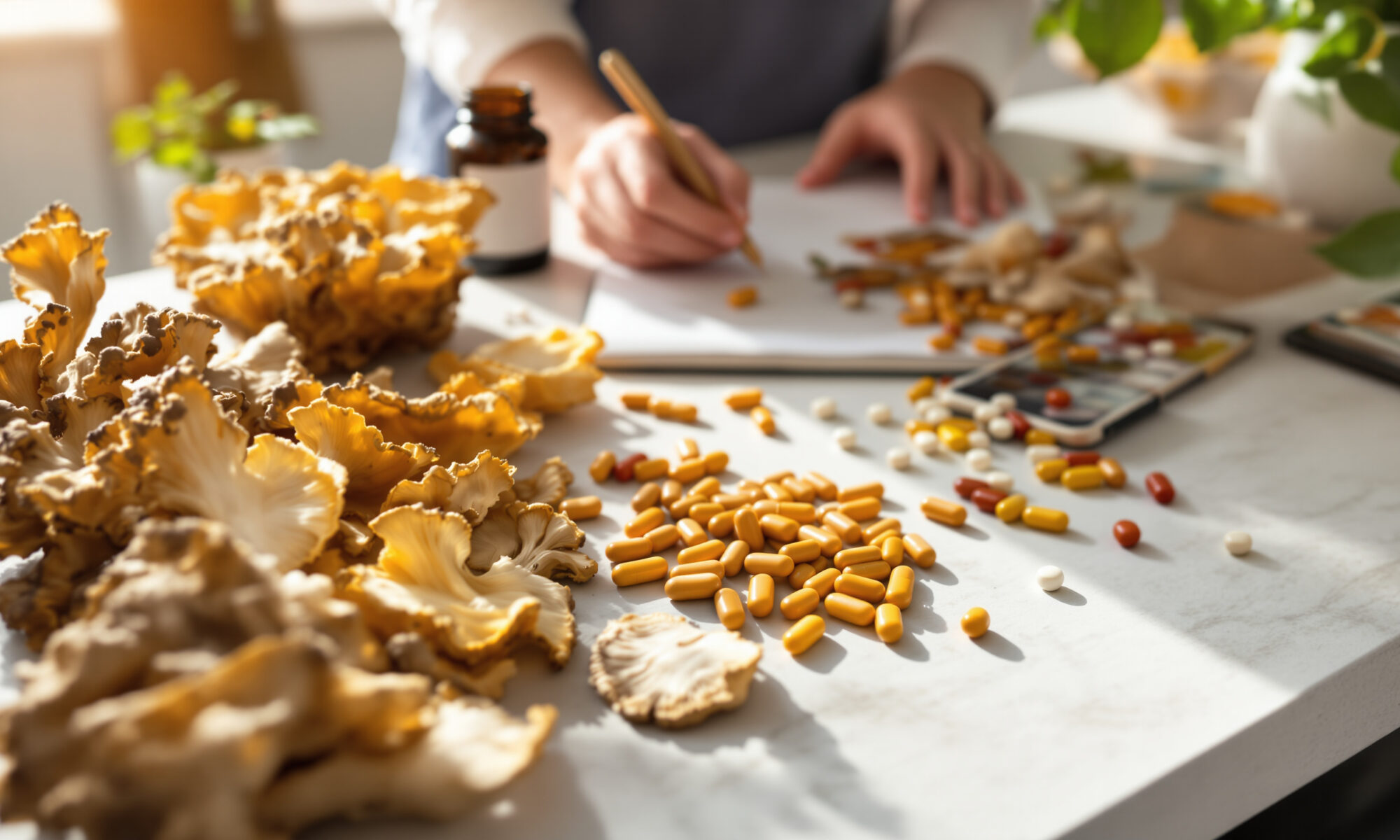
Functional mushrooms benefits are real in a narrow sense, but they’re far less settled than the longevity and cognition marketing suggests. Lion’s mane has early human data for memory and mood, reishi has limited immune and fatigue research, and cordyceps may modestly affect exercise performance. Most trials are small. If you use them, treat them as food-like add-ons, not replacements for sleep, exercise, mental health care, or prescribed treatment.
Functional mushrooms benefits: what the evidence actually supports
The phrase functional mushrooms benefits usually refers to possible effects beyond basic nutrition: sharper thinking, calmer sleep, immune support, better stamina, or healthier aging. The problem is that these claims often come from lab studies, animal research, or traditional use rather than large human trials.
That doesn’t make the topic worthless. It means the evidence sits in layers. A compound that changes nerve growth factors in a dish is interesting; it’s not the same as proving that a capsule prevents dementia in people. For readers interested in longevity, mushrooms are better viewed as one possible piece of a broader pattern, alongside the better-supported basics covered in our guide to habits linked with longer, healthier lives.
Here’s the overlooked caveat: mushroom products are not one thing. A hot-water extract, an alcohol extract, a powdered fruiting body, and a mycelium-on-grain product can contain very different amounts of beta-glucans, triterpenes, hericenones, erinacines, and starch. Two labels that both say “reishi” may not be comparable.
Lion’s mane for cognition: promising, not proven
Lion’s mane, or Hericium erinaceus, gets the most attention for brain health. The main research interest is in compounds such as hericenones and erinacines, which have shown nerve-related activity in preclinical studies. That’s the basis of many memory and focus claims.
Human evidence is still small. A 2009 Japanese randomized trial in older adults with mild cognitive impairment reported improved cognitive scores after lion’s mane intake compared with placebo, but the study included only about 30 participants and the gains appeared to fade after stopping. A 2020 pilot study in adults with overweight or obesity reported changes in mood and sleep-related measures, but again, the sample was small and the findings need replication.
So what can you reasonably say? Lion’s mane has early clinical support for mild cognitive symptoms and mood-related outcomes, but it hasn’t been shown to prevent Alzheimer’s disease, replace depression treatment, or reliably improve attention in healthy adults. Honestly, the evidence here is thinner than the marketing suggests.
If you’re exploring functional mushrooms benefits for cognition, track one or two outcomes that matter to you, such as word recall, sleep quality, or work focus, over 4 to 8 weeks. Don’t judge it by a single good day. And if you have memory changes that affect daily life, new confusion, depression symptoms, or neurological signs, speak with a qualified clinician rather than self-treating with a mushroom product.
Reishi for immunity, stress, and sleep
Reishi, usually Ganoderma lucidum, is the classic “adaptogen” mushroom in supplement marketing. Its key compounds include beta-glucans and triterpenes. Lab and animal studies suggest immune and anti-inflammatory effects, but human outcomes are harder to pin down.
A Cochrane review first published in 2012 and updated later examined reishi as an adjunct in cancer care. It did not find strong evidence that reishi improves survival, although some trials reported changes in immune markers and quality-of-life measures. The trials were generally small, varied in product type, and often had risk-of-bias concerns.
For sleep and stress, reishi is even less certain. Many people use it at night because it feels calming, but good placebo-controlled human trials for insomnia are limited. If your main issue is chronic sleep loss, reishi matters less than light exposure, alcohol use, consistent wake time, pain, anxiety, and sleep apnea screening.
Safety deserves more attention than it gets. Reishi may cause digestive upset, dry mouth, rash, or headache in some users. Case reports have described liver injury with certain reishi products, though causality is not always clear. People taking blood thinners, immune-suppressing drugs, chemotherapy, or those preparing for surgery should ask a clinician or pharmacist before using concentrated extracts.
Cordyceps and stamina: the performance claim in context
Cordyceps is often sold for energy, libido, and athletic performance. The wild fungus Ophiocordyceps sinensis is rare and expensive, so most products use cultivated Cordyceps militaris or related extracts. That substitution isn’t automatically bad, but it makes product claims harder to compare.
Exercise research is mixed. Small randomized trials have examined oxygen use, time to exhaustion, or fatigue scores, with some showing modest improvements and others showing little difference. A 2021 systematic review of cordyceps and exercise performance found potential benefits in some measures, but the included studies were limited by small sample sizes, different extracts, and short durations.
A useful numbers-based comparison: if your VO2 max improves by 3% in a short trial, that may look impressive on a graph but may not change your daily life unless you train consistently. For most healthy adults, walking more, resistance training twice weekly, and sleeping enough will outperform any mushroom extract.
Cordyceps may also affect blood sugar or immune activity in theory, based mostly on preclinical and early human data. If you take diabetes medication, have an autoimmune condition, are pregnant, or use immune-modifying drugs, don’t treat it as automatically harmless.
Lion’s mane, reishi, and cordyceps compared
Functional mushrooms benefits become easier to judge when you separate the claim, the research stage, and the main safety issue. The table below uses named mushroom types rather than brand claims, because brand formulas change and are often not tested in published trials.
| Mushroom | Main marketed use | Human evidence as of 2024 | Best-known active compounds | Key caution |
|---|---|---|---|---|
| Lion’s mane | Cognition and mood | Small randomized trials, including a 2009 mild cognitive impairment study of about 30 adults | Hericenones, erinacines, beta-glucans | Allergy risk; don’t use for new memory loss without assessment |
| Reishi | Immune support, fatigue, sleep | Cochrane cancer-care review in 2012 found limited evidence and no clear survival benefit | Beta-glucans, ganoderic acids, triterpenes | Possible bleeding interaction and rare liver injury reports |
| Cordyceps | Energy and exercise performance | Small trials and a 2021 review suggest mixed, modest performance findings | Cordycepin, adenosine-related compounds, polysaccharides | Use caution with diabetes drugs or immune-related conditions |
Readers curious about the longevity angle may also want our separate overview of mushrooms and anti-aging claims, which goes deeper into oxidative stress, inflammation, and why animal data often gets overstated.
How to choose and use them without being misled
Quality matters because functional mushroom products sit in the supplement market, not the drug market. In the United States, the FDA does not approve supplements for effectiveness before sale. Companies are responsible for safety and labeling, but premarket proof is not the same as it is for medicines.
Use a simple filter before buying:
- Look for the exact species name, such as Hericium erinaceus or Ganoderma lucidum, not just “mushroom blend.”
- Check whether it is fruiting body, mycelium, or both, and whether the label lists beta-glucan content rather than only “polysaccharides.”
- Prefer products with third-party contaminant testing for heavy metals and microbes.
- Avoid disease claims such as “treats cancer,” “reverses dementia,” or “cures anxiety.”
- Stop and reassess if you develop rash, wheezing, severe digestive symptoms, unusual bruising, jaundice, or dark urine.
There’s also a practical cost calculation. If a mushroom powder costs $35 for 30 servings, that’s about $1.17 per day, or roughly $427 per year. If you’re spending that while skipping dental care, blood pressure checks, therapy, or basic fitness, your priorities are probably upside down.
For a broader preventive-health frame, lifestyle medicine remains much better supported than mushroom extracts. Dietary pattern, exercise, smoking status, sleep, and blood pressure have stronger evidence behind them, as discussed in our coverage of the rise of lifestyle medicine. Functional mushrooms benefits may be additive for some people, but they’re not a foundation.
Who should be more cautious?
Healthy adults who use culinary mushrooms or short-term, reputable extracts usually face low risk, but “natural” doesn’t mean risk-free. Concentrated extracts can interact with medications or affect symptoms in ways a dinner serving of mushrooms would not.
Be more careful if you’re pregnant or breastfeeding, have liver disease, take anticoagulants or antiplatelet drugs, use insulin or sulfonylureas, have an autoimmune condition, are on immune-suppressing therapy, or are receiving cancer treatment. Children should not be given concentrated mushroom supplements without pediatric guidance.
Mental health claims need special care. Some people report calmer mood with reishi or better focus with lion’s mane, but these products are not treatments for severe anxiety, major depression, psychosis, substance withdrawal, or suicidal thoughts. If stress, sleep, or recovery is the main concern, our article on emotional skills in recovery is a more grounded place to start than supplement shopping.
One fair way to think about these fungi: they may be useful experiments for selected people, especially when expectations are modest and safety is checked. The strongest case is not “mushrooms will transform your health.” It’s “some mushroom extracts have early human data worth watching, and a few may help certain outcomes a little.”
FAQ
What are the main functional mushrooms benefits?
The main claimed benefits are cognition support from lion’s mane, immune or fatigue support from reishi, and stamina support from cordyceps. Human evidence exists but is mostly small, short-term, and product-specific.
Is lion’s mane better than reishi?
It depends on the goal. Lion’s mane has more direct early evidence for cognition and mood, while reishi is studied more for immune markers, fatigue, and adjunct cancer-care outcomes.
Can functional mushrooms help with longevity?
There’s no good human evidence that mushroom supplements extend lifespan. Some compounds affect inflammation or oxidative stress in preclinical studies, but longevity in people is better supported by exercise, diet quality, sleep, and cardiovascular risk control.
How long does it take to notice functional mushroom effects?
Many human trials run for 4 to 16 weeks, so judging effects after a few days is unreliable. If you try one, track a specific outcome and stop if side effects appear.
Are functional mushrooms safe to take every day?
Daily use may be reasonable for some healthy adults, but safety depends on the species, extract, dose, health conditions, and medications. People with liver disease, bleeding risk, immune conditions, pregnancy, or cancer treatment should get clinical guidance first.
{“@context”:”https://schema.org”,”@type”:”FAQPage”,”mainEntity”:[{“@type”:”Question”,”name”:”What are the main functional mushrooms benefits?”,”acceptedAnswer”:{“@type”:”Answer”,”text”:”The main claimed benefits are cognition support from lion’s mane, immune or fatigue support from reishi, and stamina support from cordyceps. Human evidence exists but is mostly small, short-term, and product-specific.”}},{“@type”:”Question”,”name”:”Is lion’s mane better than reishi?”,”acceptedAnswer”:{“@type”:”Answer”,”text”:”It depends on the goal. Lion’s mane has more direct early evidence for cognition and mood, while reishi is studied more for immune markers, fatigue, and adjunct cancer-care outcomes.”}},{“@type”:”Question”,”name”:”Can functional mushrooms help with longevity?”,”acceptedAnswer”:{“@type”:”Answer”,”text”:”There’s no good human evidence that mushroom supplements extend lifespan. Some compounds affect inflammation or oxidative stress in preclinical studies, but longevity in people is better supported by exercise, diet quality, sleep, and cardiovascular risk control.”}},{“@type”:”Question”,”name”:”How long does it take to notice functional mushroom effects?”,”acceptedAnswer”:{“@type”:”Answer”,”text”:”Many human trials run for 4 to 16 weeks, so judging effects after a few days is unreliable. If you try one, track a specific outcome and stop if side effects appear.”}},{“@type”:”Question”,”name”:”Are functional mushrooms safe to take every day?”,”acceptedAnswer”:{“@type”:”Answer”,”text”:”Daily use may be reasonable for some healthy adults, but safety depends on the species, extract, dose, health conditions, and medications. People with liver disease, bleeding risk, immune conditions, pregnancy, or cancer treatment should get clinical guidance first.”}}],”@id”:”https://www.healthylifevitality.com/?p=2540/#faq”}