
The best SAD lamp is a UV-free white-light box that delivers 10,000 lux at a clearly stated distance and fits comfortably into your morning routine. Among models with published specifications, the Carex TheraLite Aura offers the lowest verified price, while larger Carex and Circadian Optics panels give you more room to move. No independent trial proves that one listed model treats seasonal affective disorder better than another.
What makes the best SAD lamp?
Brightness alone isn’t enough. A product may advertise 10,000 lux without saying how close you must sit to receive it. Ohio State Wexner Medical Center advised in 2026 that buyers should look for 10,000 lux at the recommended viewing distance, while the NHS also recommends a 10,000-lux, UV-free lamp.
Distance changes the practical value. A lamp that reaches 10,000 lux at 12 inches requires you to remain roughly a ruler’s length from the panel. Move farther away and the light reaching your eyes falls, although the exact drop depends on the lamp’s design and can’t be calculated reliably from headline lux alone.
Use these criteria when comparing models:
- 10,000 lux at a stated distance: “Up to 10,000 lux” is less informative when the manufacturer omits the measurement distance.
- UV-free or UV-filtered light: Light therapy doesn’t require ultraviolet exposure.
- A workable panel size: A larger screen can make it easier to receive light while eating breakfast or working, though size doesn’t establish greater clinical benefit.
- White light: Standard white-light boxes have a longer clinical history than blue-only devices, which are less studied for SAD.
- Comfort controls: Brightness settings, glare control and flicker-free operation may help you tolerate regular use, but they don’t prove better treatment results.
Honestly, product marketing often gives you fewer useful facts than it should. The best SAD lamp should publish brightness and distance together; otherwise, you can’t make a fair comparison.
Four SAD lamps compared by published specifications
The table uses manufacturer information retrieved on November 6, 2026. Prices are snapshots rather than permanent offers. No comparative clinical testing or independent treatment ranking was located for these products, so the labels below describe practical distinctions, not proven medical superiority.
| Lamp | Lux and distance | Panel or product size | UV claim | Price on Nov. 6, 2026 |
|---|---|---|---|---|
| Carex TheraLite Aura | 10,000 lux at 12 inches | 11.25 × 8-inch screen | 100% UV protection | $55.99 sale; $72.99 list |
| Carex Day-Light Classic Plus | 10,000 lux at 12–14 inches | 16 × 13-inch screen | 100% UV blocking | No direct-sale price shown |
| Verilux HappyLight Luxe | Up to 10,000 lux; distance not stated | 11.7 × 7.5 × 0.5 inches | UV-free LED | No price shown in retrieved text |
| Circadian Optics Langham Clinical Standard | 10,000 lux at 12 inches | 6 × 17-inch panel | UV-free light | $149.99 |
For a budget-focused buyer, the Carex TheraLite Aura has the clearest case: $55.99 and a stated 10,000 lux at 12 inches. Its four settings and maker-reported flicker-free operation add flexibility, although those features haven’t been shown to improve depression outcomes.
The Day-Light Classic Plus has the largest conventional screen in this comparison. It produces 10,000 lux at 12–14 inches, blocks UV and uses 4000 K full-spectrum light. Its broad 16 × 13-inch panel may suit someone who finds it hard to stay aligned with a narrow lamp, but no current direct-sale price appeared in the retrieved product text.
Verilux’s HappyLight Luxe is the thinnest listed option at 0.5 inches deep. It offers four brightness levels and three color-temperature settings, and the manufacturer describes it as free of glare, flicker and hotspots. The unresolved issue is significant: the retrieved page said “up to 10,000 lux” without stating the required distance.
The Circadian Optics Langham Clinical Standard costs $149.99 and delivers 10,000 lux at 12 inches. Its 6 × 17-inch shape is tall and narrow. A larger Langham Max version was reported to deliver the same brightness at 18 inches with a 12 × 22-inch panel, potentially allowing more freedom of movement, but its price wasn’t supplied in the reviewed facts.
How to use a SAD lamp correctly
NIMH’s 2026 guidance describes a typical protocol as 10,000 lux for about 30–45 minutes, usually first thing in the morning from fall through spring. Mayo Clinic gives a slightly narrower routine: 20–30 minutes within the first hour after waking, generally 16–24 inches from the face, while following the lamp maker’s specified distance.
Those distances can appear contradictory. They aren’t a universal rule because lamp output differs. If a model reaches 10,000 lux only at 12 inches, sitting 24 inches away doesn’t follow its tested setup; the manufacturer’s distance takes priority.
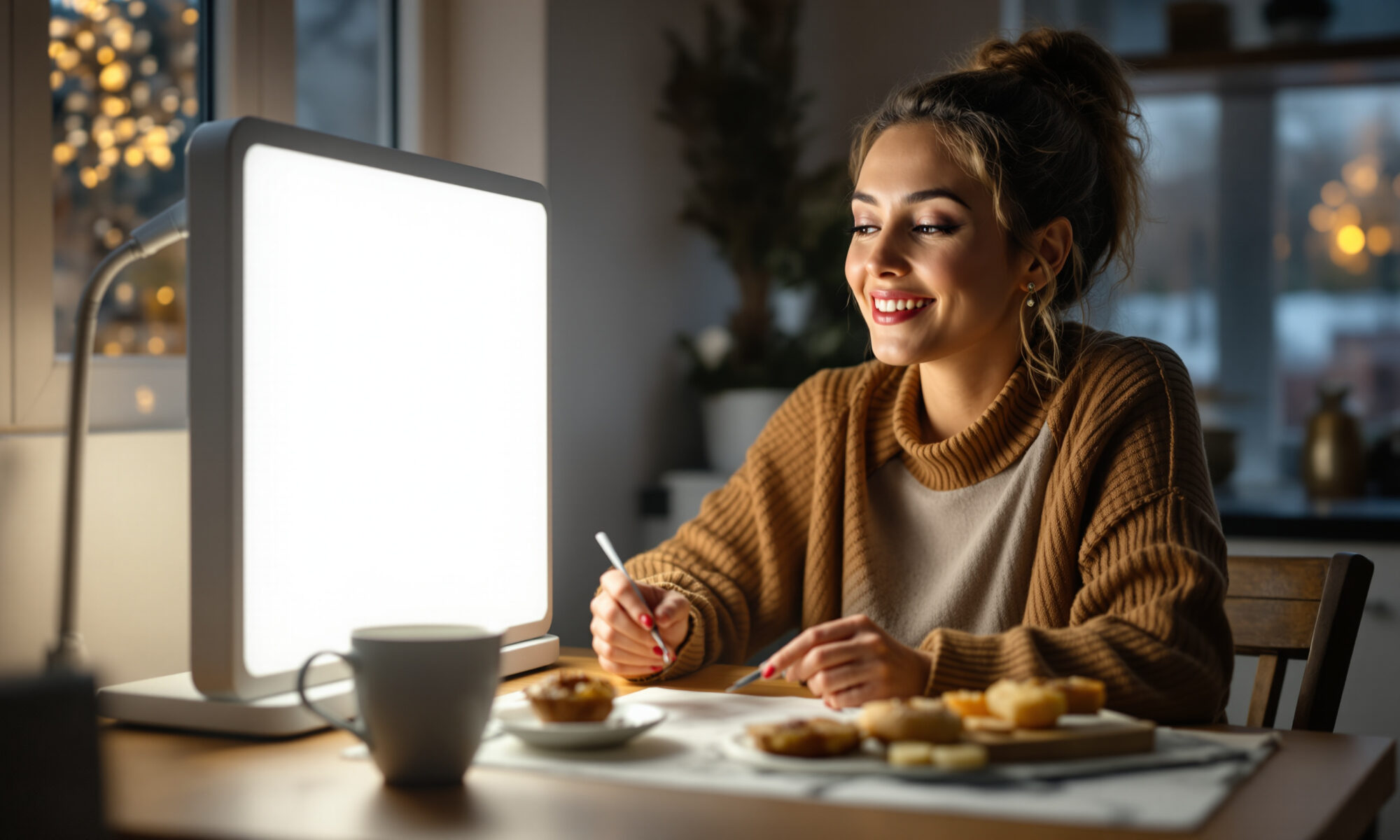
Keep your eyes open, but don’t stare directly into the light. Position the box slightly off-center while you eat, read or work, and use it at a consistent morning time. For more detail on timing and expectations, see our guide to light therapy for seasonal affective disorder.
A concrete time calculation helps. Thirty minutes each morning for five months is about 75 hours of use: 0.5 hour × roughly 150 days. A cheaper lamp that’s awkward to position may be poorer value than one you’ll reliably use, but a higher price doesn’t mean stronger treatment.
Safety, side effects and overlooked risks
Bright-light therapy is generally used without UV exposure, yet it isn’t risk-free. Possible effects include eye strain, headache, nausea, agitation and sleep disruption, especially when sessions are too long or too late in the day. Adjustments to timing or duration should be discussed with a qualified clinician if symptoms persist.
People with bipolar disorder need particular care because excessive or poorly timed light exposure can trigger manic symptoms. Medical guidance is also sensible if you have an eye condition or take a medicine that increases sensitivity to light. Mayo Clinic and Ohio State both highlighted these groups in 2026.
Sleep timing matters too. Morning light can support circadian timing, while bright evening exposure may make it harder to fall asleep. Our review of sleep and mental health explains how regular wake times and nighttime light exposure fit into the wider picture.
If your low mood is severe, lasts beyond the usual seasonal period or includes thoughts of self-harm, don’t rely on a lamp alone. Seek prompt professional help; emergency or crisis services are appropriate when you’re in immediate danger.
When light therapy isn’t enough
Seasonal affective disorder is depression with a recurring seasonal pattern, not simply disliking dark weather. NIMH listed light therapy, psychotherapy, antidepressant medication and vitamin D among treatment approaches in 2026. Psychotherapy and antidepressants may be used alone or alongside light treatment.
A lamp also won’t answer whether your symptoms come from SAD, another depressive disorder, bipolar disorder, a sleep problem or a medical condition. If you’re unsure, the distinctions in our burnout and depression guide may help you recognize patterns, but assessment belongs with a clinician.
Daily movement can be useful alongside formal care, though it isn’t a replacement for treatment. The evidence and practical starting points are covered in our guide to exercise for depression. For most people with persistent symptoms, getting the diagnosis right matters more than finding a lamp with extra color settings.
Frequently asked questions
How many lux should the best SAD lamp have?
Look for 10,000 lux at a specified viewing distance. A 10,000-lux claim without a distance is incomplete because brightness at your eyes falls as you move away.
How long should I sit in front of a SAD lamp?
Typical guidance ranges from 20 to 45 minutes in the morning, depending on the device and clinical plan. Follow the manufacturer’s distance and instructions rather than assuming every lamp works the same way.
Can I use a SAD lamp all day?
That’s generally unnecessary and may increase headache, eye strain, agitation or sleep problems. Standard protocols use a limited morning session rather than continuous exposure.
Is red light therapy the same as a SAD lamp?
No. SAD lamps provide bright visible white light to influence circadian timing and mood; red-light devices use different wavelengths and are marketed for different purposes. They aren’t interchangeable.
Do SAD lamps provide vitamin D?
UV-free SAD lamps don’t produce vitamin D through the skin. Their purpose is bright-light exposure without ultraviolet radiation, not replacement of sunlight’s UVB effect.