

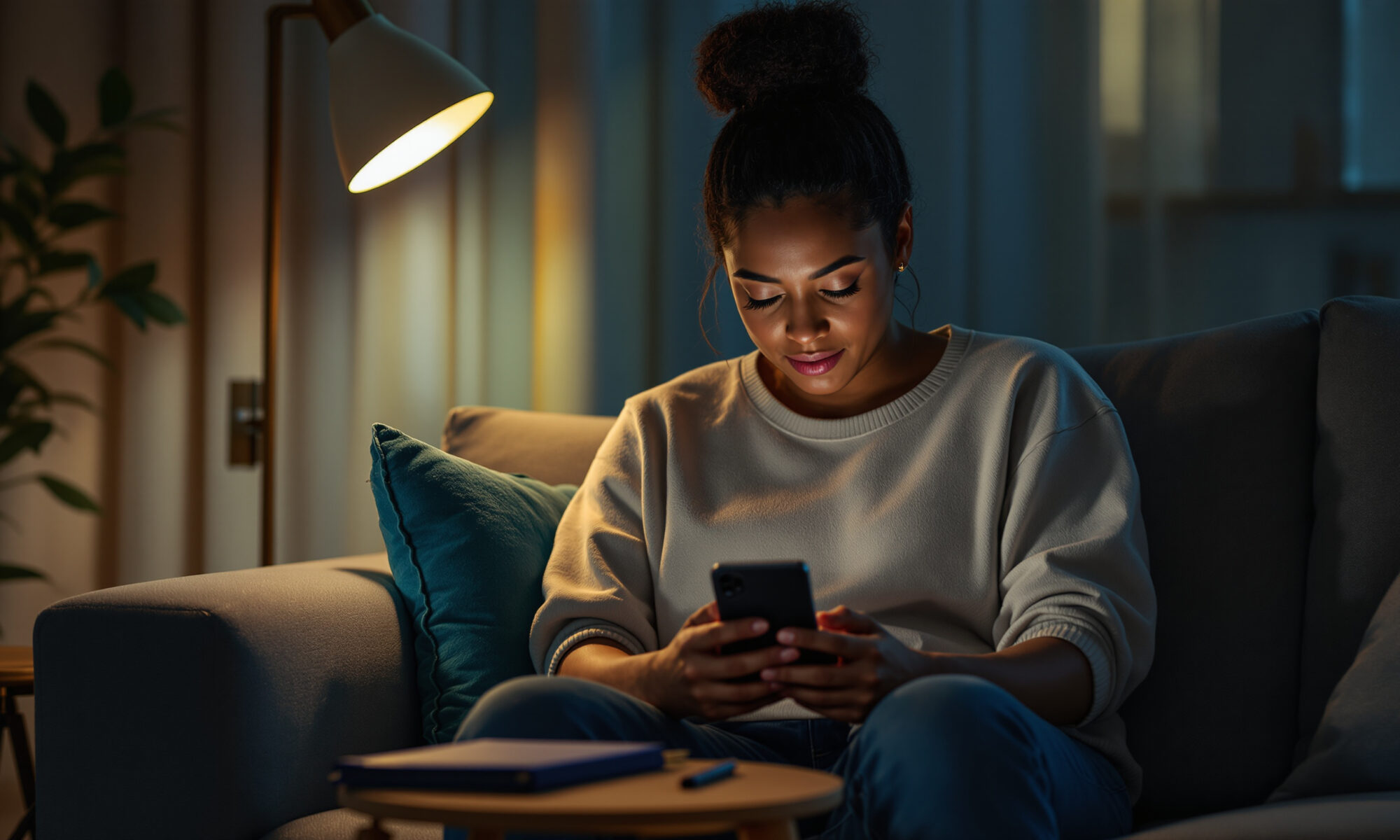
Doomscrolling mental health concerns are real: repeated exposure to distressing news can raise anxiety, worsen mood, and keep your nervous system on alert. The fix isn’t pretending bad news doesn’t exist. It’s building friction, setting time limits, and choosing when you get information so your phone stops acting like an anxiety machine.
Doomscrolling mental health effects: what is happening in your brain?
Doomscrolling means compulsively moving through negative or threatening content, often long after you meant to stop. It can be war updates, climate disasters, political conflict, crime, celebrity tragedy, or personal posts that make you feel unsafe or behind. The common thread is loss of control.
Your brain is biased toward threat. That’s useful when danger is nearby, but less useful when an endless feed serves you one alarming headline after another. Each swipe offers a tiny chance of relief: maybe the next post will explain it, resolve it, or make you feel prepared. Often, it doesn’t.
Research on doomscrolling mental health is still developing, but the broader evidence on media exposure and distress is stronger. A 2022 systematic review on COVID-19 news consumption found associations between heavy pandemic media exposure and higher anxiety, depression, and stress, though many included studies were cross-sectional, meaning they couldn’t prove which came first. People who were already anxious may also have watched more news.
Algorithmic feeds add another layer. Platforms tend to reward content that gets reactions, and fear is a powerful reaction trigger. If you often read crisis posts to the end, pause on alarming videos, or argue in comment sections, the system may infer that you want more of it.
Why anxiety makes the cycle harder to break
Anxiety doesn’t only feel bad. It changes what you look for. When you’re worried, your attention tilts toward threat, your body becomes more alert, and uncertainty feels harder to tolerate.
Doomscrolling can look like problem-solving from the inside. You tell yourself you’re staying informed. Sometimes you are. But after the fourth thread, the eighth update, and the second hour in bed, information has usually turned into reassurance-seeking. Reassurance fades fast, so you check again.
Clinical anxiety disorders are more than normal worry, and screen habits are rarely the only cause. Still, doomscrolling mental health patterns can aggravate symptoms you already have, especially if they cut into sleep, exercise, face-to-face contact, or therapy homework. If anxiety is persistent, causing panic attacks, interfering with work or school, or making you feel unsafe, talk with a qualified clinician or crisis service in your country.
A concrete test helps. If checking the feed leaves you calmer after 10 minutes and you can stop, it’s probably information. If it leaves you more tense and you keep going, it’s probably the loop.
The mood and sleep costs, in numbers
Sleep is where this habit often does the most damage. The American Academy of Sleep Medicine and other sleep medicine groups generally advise keeping a consistent sleep schedule and reducing stimulating screen use before bed. The exact effect of blue light varies by device, brightness, distance, and timing, but the emotional content may matter as much as the light.
One overlooked caveat: a 20-minute news check at 2 p.m. is not the same exposure as 20 minutes of disaster videos at 11:45 p.m. Timing changes the cost. Late-night threat content can delay sleep, and lost sleep makes anxiety feel louder the next day.
| Habit pattern | Typical exposure | Likely mental health cost | Better boundary |
|---|---|---|---|
| Morning headline scan | 10-15 minutes | Lower risk if intentional | 1 chosen news source |
| Bedtime scrolling | 30-60 minutes | Higher sleep and anxiety risk | Phone outside bedroom |
| Crisis live updates | 60-180 minutes | High stress load, little new action | 2 scheduled checks daily |
| Comment-section arguing | 20-90 minutes | Anger, rumination, social threat | Mute replies after 1 comment |
The numbers above are not diagnostic cutoffs. They are practical thresholds. If your scrolling regularly passes the point where you can act on the information, you’re paying attention without getting useful agency back.
For a broader look at how heavy social media use relates to well-being, our report on social media and declining happiness covers population-level findings and their limits. The short version: associations are consistent enough to take seriously, but individual effects vary a lot.
How to stop doomscrolling without quitting the news
A total digital detox can help some people, especially during a short reset. But for many readers, quitting all news is unrealistic and may even increase anxiety if it feels like losing awareness. A better goal is controlled exposure.
Start with friction, not willpower. Apps are designed to be easy to open when you’re tired, bored, or worried. You need small barriers that make the automatic action less automatic.
- Choose two news windows. Try 15 minutes in the late morning and 15 minutes in the early evening, not right after waking and not in bed.
- Use one or two reliable sources. Prefer outlets with corrections policies, named reporters, and original reporting over repost accounts.
- Remove the fastest trigger. Delete the app icon from your home screen, turn off breaking-news alerts, or log out after each use.
- Set an action rule. If a story matters to you, decide on one action: donate, call a representative, check on a friend, prepare a supply, or stop reading.
- Replace the landing strip. Put a book, podcast, crossword, breathing exercise, or message to a real person where the feed used to be.
The action rule is underrated. It separates civic attention from helpless exposure. Honestly, most doomscrolling mental health advice skips this and jumps straight to “use your phone less,” which is true but too vague to survive a stressful week.
If you want a short reset, the story of an artist choosing a temporary digital detox from social media apps is a useful cultural example, not a medical prescription. The lesson is simple: removing access changes behavior faster than arguing with yourself.
Digital detox: who benefits, and who may need a different plan?
A digital detox is a planned break from certain apps, devices, or online spaces. It can last one evening, a weekend, or a month. The best version is specific: “no social apps after 8 p.m.” beats “be healthier online.”
Doomscrolling mental health risks are higher when you already have generalized anxiety, obsessive-compulsive symptoms, depression, trauma exposure, insomnia, or high stress at work or school. Students may be especially vulnerable during transitions because phones become both support system and stress pipeline; our guide to college mental health challenges covers that pressure in more detail.
Some people shouldn’t cut off information completely. If you’re in an area affected by severe weather, conflict, wildfire, or public health alerts, you may need timely updates. In that edge case, switch from social feeds to official alert channels such as local emergency management, the National Weather Service in the United States, or your country’s public health agency.
Another edge case: avoidance. If you use detox rules to avoid bills, medical appointments, messages from loved ones, or school responsibilities, the break may reduce anxiety briefly while making life harder later. The goal is less compulsive exposure, not disappearing from your own life.
What the evidence can and can’t tell us
Doomscrolling is a newer term, so the evidence base is smaller than the evidence on sleep, anxiety, and social media use more broadly. A 2020 paper in Health Communication described “doomscrolling” during the pandemic period and linked it to distress, but much of this field still relies on self-reported habits. Self-report is useful, but imperfect.
Large observational studies often find that heavier social media use is associated with worse well-being, particularly among adolescents and young adults, but the effect sizes are usually modest and causation is hard to pin down. A teen who is lonely may scroll more; scrolling may then deepen the loneliness. Both can be true.
Experimental studies are more helpful when they reduce or alter social media use for a set period. Several small trials from the late 2010s and early 2020s found that reducing social media time can improve well-being for some participants, but benefits differ by baseline mental health, platform, and what replaces the screen time. A lonely person who deletes apps but has no offline contact may not feel better.
For most people, doomscrolling mental health risk matters less as a single villain and more as a multiplier. It magnifies poor sleep, chronic stress, isolation, and worry. Pairing screen boundaries with evidence-informed habits linked to happiness, such as social connection and regular movement, is more realistic than expecting one app setting to fix your mood.
Build a relapse-proof news routine
You don’t need a perfect routine. You need one that survives bad days. Assume you’ll break your rules sometimes, then design a reset that takes 30 seconds.
Try a simple calculation: if you scroll 45 minutes a night, that’s 315 minutes a week, or 273 hours a year. Even cutting one-third of that gives you about 91 hours back. That’s enough time for dozens of walks, therapy sessions, calls with friends, or earlier bedtimes.
Doomscrolling mental health work also benefits from self-compassion. Shame makes people hide the behavior, and hidden habits are harder to change. If burnout is part of the picture, our piece on mental wellness and self-compassion offers a useful frame: reduce the load before blaming yourself for struggling under it.
Make the default visible. Put your charger outside the bedroom. Keep a paper notepad by the bed for worries that feel urgent. Use grayscale mode after 9 p.m. Set app limits, but don’t rely on them alone; many people override them in two taps.
One question is worth asking: what do you want your phone to be for after 8 p.m.? If the answer is connection, call one person or send one thoughtful message. If the answer is information, read one article from a trusted source. If the answer is comfort, choose comfort directly rather than hoping a feed will accidentally provide it.
FAQ
Is doomscrolling a mental illness?
No. Doomscrolling is a behavior pattern, not a formal diagnosis. It can still worsen anxiety, sleep problems, and low mood, especially when it becomes hard to stop.
How much news is too much for anxiety?
There is no universal safe number. A practical warning sign is when 10-20 minutes of checking turns into repeated checking that leaves you more tense, less informed, and less able to sleep or act.
It can help some people, particularly if social apps are replacing sleep, movement, or real contact. The evidence is mixed because benefits depend on what you do instead and whether social media was your main source of support.
What should I do when breaking news makes me panic?
Move from feeds to one reliable source, set a timer for 10 minutes, and choose one concrete action if action is possible. If panic is frequent, intense, or disrupting daily life, get help from a licensed mental health professional.
{“@context”:”https://schema.org”,”@type”:”FAQPage”,”mainEntity”:[{“@type”:”Question”,”name”:”Is doomscrolling a mental illness?”,”acceptedAnswer”:{“@type”:”Answer”,”text”:”No. Doomscrolling is a behavior pattern, not a formal diagnosis. It can still worsen anxiety, sleep problems, and low mood, especially when it becomes hard to stop.”}},{“@type”:”Question”,”name”:”How much news is too much for anxiety?”,”acceptedAnswer”:{“@type”:”Answer”,”text”:”There is no universal safe number. A practical warning sign is when 10-20 minutes of checking turns into repeated checking that leaves you more tense, less informed, and less able to sleep or act.”}},{“@type”:”Question”,”name”:”Can deleting social media improve mental health?”,”acceptedAnswer”:{“@type”:”Answer”,”text”:”It can help some people, particularly if social apps are replacing sleep, movement, or real contact. The evidence is mixed because benefits depend on what you do instead and whether social media was your main source of support.”}},{“@type”:”Question”,”name”:”What should I do when breaking news makes me panic?”,”acceptedAnswer”:{“@type”:”Answer”,”text”:”Move from feeds to one reliable source, set a timer for 10 minutes, and choose one concrete action if action is possible. If panic is frequent, intense, or disrupting daily life, get help from a licensed mental health professional.”}}],”@id”:”https://www.healthylifevitality.com/?p=2620/#faq”}