

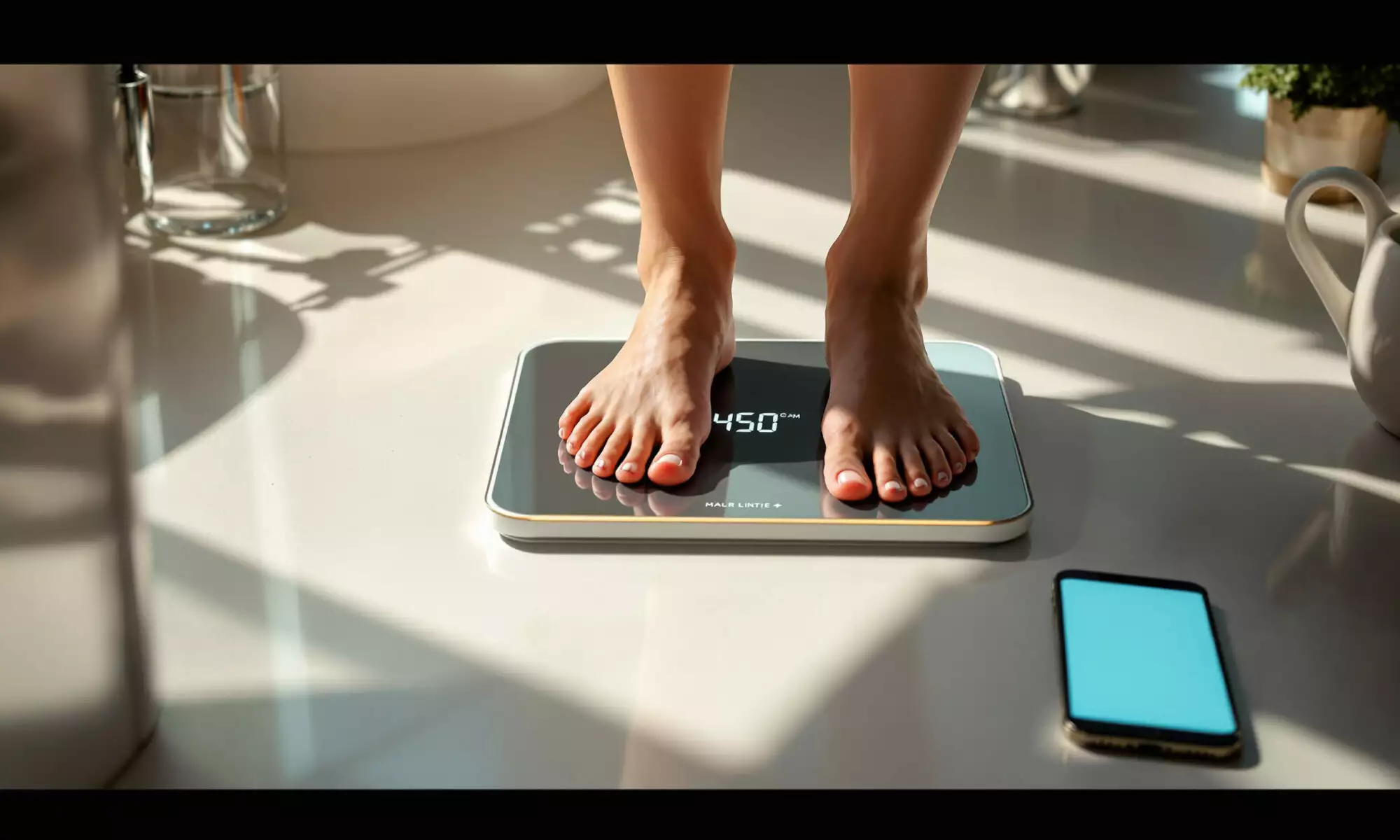
Smart scale accuracy body fat estimates are useful for tracking broad trends, not for knowing your exact body fat percentage. Most home scales use bioelectrical impedance, which can be thrown off by hydration, recent exercise, food, alcohol, menstrual cycle changes, and the device’s algorithm. If you use one, compare readings taken under the same conditions and watch the direction over weeks, not single-day changes.
Smart scale accuracy body fat: what these devices actually measure
A smart scale does not directly measure fat. It sends a small, painless electrical current through your body and estimates body composition from electrical resistance, plus your height, weight, age, sex, and sometimes activity level.
This method is called bioelectrical impedance analysis, or BIA. Muscle and body water conduct electricity better than fat, so the device uses impedance to estimate total body water, then uses equations to estimate fat mass and lean mass. The catch is obvious: if the water estimate is off, the fat estimate can be off too.
Smart scale accuracy body fat claims vary because each brand uses its own algorithm. Two scales can read the same person on the same morning and produce different body fat percentages, even when the weight reading is nearly identical. That’s not a small detail; it’s the core limitation.
How far off can a smart scale be?
Compared with laboratory methods such as DXA scans, BIA devices can be reasonably correlated at a group level, but individual readings often miss the mark. A 2021 review of consumer body composition devices reported that estimates can differ meaningfully from reference methods, especially in people with higher BMI, older adults, athletes, and people whose hydration status is unusual.
In plain terms, a bathroom scale may tell you that your body fat is 24% when a more controlled test might estimate 20% or 28%. That four-point swing matters if you treat the number as a diagnosis. It matters much less if the same device, used consistently, drops from 30% to 27% over several months while your waist measurement and fitness are moving in the same direction.
Honestly, the precision promised in many product descriptions is better than the evidence supports. A smart scale can be a decent home tracking tool. It is not a medical-grade body composition test.
| Measurement method | Typical setting | What it estimates | Key limitation |
|---|---|---|---|
| Consumer BIA smart scale | Home bathroom | Body fat %, fat mass, lean mass | Hydration and algorithm error |
| Multi-frequency clinical BIA | Clinic or research unit | Total body water, fat-free mass | Still equation-dependent |
| DXA scan | Imaging center | Bone mass, fat mass, lean mass | Radiation exposure is low but present |
| Air displacement plethysmography | Sports lab or clinic | Body density and fat % | Breathing and clothing affect results |
| Waist measurement | Home or clinic | Central fat risk marker | Does not estimate total body fat % |
Why your reading changes overnight
A one-day body fat jump on a smart scale is almost never real fat gain. To gain 1 pound of body fat, a rough energy surplus of about 3,500 calories is often used as a simplified estimate, though real metabolism is more complicated. If your scale says your fat mass rose by 2 pounds after a salty dinner, water is the more likely explanation.
Hydration is the big confounder. Dehydration can make electrical resistance higher, which may push estimated body fat upward. Fluid retention can shift the estimate the other way, depending on the device and where the current travels.
Foot-to-foot scales mostly measure the lower body and infer the rest. Hand-to-foot systems pass current through more of the body, but they’re less common at home. For people who carry more fat in the abdomen or have unusual muscle distribution, smart scale accuracy body fat readings may be especially misleading.
Recent exercise adds another wrinkle. A hard workout changes blood flow, skin temperature, sweat loss, and muscle fluid balance. Alcohol, a large meal, sauna use, and poor sleep can also shift the number without changing your actual body composition.
Use trends, not single readings
The smartest way to use a body composition scale is boring: same scale, same time, same conditions. Morning after using the bathroom, before breakfast, and before exercise is the most repeatable setup for most people.
Do not compare your number with a friend’s number from a different scale. Do not switch brands and assume the trend continues. And don’t treat 0.3 percentage points as meaningful; that’s noise wearing a decimal point.
- Weigh 2 to 4 mornings per week, then compare weekly averages.
- Take readings before food, alcohol, exercise, or a hot shower.
- Track waist size once every 2 to 4 weeks at the same spot.
- Look for a trend lasting at least 4 to 8 weeks before reacting.
- Ignore sudden body fat changes after travel, illness, hard workouts, or menstrual cycle shifts.
A concrete example helps. If your scale shows 31.2%, 30.9%, 31.5%, and 30.8% in one week, your average is about 31.1%. If the average is 29.7% eight weeks later, and your waist is down 1 inch, that trend is more credible than any single reading.
Who gets less reliable results?
Smart scale accuracy body fat estimates are usually least reliable when the user does not match the population used to build the equation. That includes very muscular people, endurance athletes, older adults with low muscle mass, people with obesity, and people with edema or fluid shifts.
Pregnancy is another clear edge case. Body water, weight, and tissue changes make standard body fat estimates poor, and many manufacturers advise against using impedance features during pregnancy. People with implanted cardiac devices, such as pacemakers or defibrillators, should check the device instructions and ask a clinician before using impedance functions, because the scale sends an electrical current through the body.
Children and teenagers are often better served by growth charts and pediatric guidance than by body fat numbers from consumer tech. Eating disorder history also changes the risk-benefit balance. For some people, constant body metrics make health worse, not better; if tracking increases anxiety or restrictive eating, stop and get support from a qualified health professional.
For most people, smart scale accuracy body fat concerns matter less than the basics: blood pressure, blood sugar when indicated, sleep, strength, diet quality, and mental health. If you’re trying to build healthier routines, broader lifestyle patterns, including sleep and mood, may matter more than a percentage on an app; our guide to habits linked with better wellbeing covers that wider picture.
What body fat number is “healthy”?
There is no single ideal body fat percentage. Age, sex, muscle mass, ethnicity, medical history, and the measurement method all affect interpretation. General fitness charts often place healthy adult ranges roughly around 10% to 25% for men and 20% to 35% for women, but these are broad categories, not diagnostic cutoffs.
Clinical risk is often better captured by waist circumference, blood pressure, blood lipids, blood sugar, smoking status, and physical activity. The CDC and NHS both emphasize BMI and waist measurement as imperfect but practical screening tools, not final judgments about an individual’s health.
Food quality matters too. A scale can’t tell whether your diet is high in fiber, whether you’re getting enough protein, or whether your household food access is constrained; coverage of school meal nutrition rules is a reminder that health metrics sit inside real food environments, not just personal willpower.
Smart scale accuracy body fat readings also should not drive extreme dieting. If a number pushes you toward fasting, dehydration, laxatives, unneeded supplements, or skipping prescribed medication, the device is no longer serving your health.
How to choose and calibrate your expectations
Choose a scale for consistency and usability, not because it claims clinical precision. Look for clear data privacy settings, the option to export or delete data, and transparent explanations of what the device measures. Health tech is still tech, and your weight data is sensitive.
Some models use multi-frequency BIA and hand electrodes, which may improve estimates in certain users, but the improvement is not magic. A more expensive scale can still be wrong for your body. If you’re comparing smart scale accuracy body fat across brands, independent validation against DXA or multi-compartment models matters more than app graphics.
Privacy deserves more attention than it gets. Body weight, body fat estimates, reproductive status clues, and location-linked app data can be sensitive. If phone tracking is starting to feel intrusive, the same principle behind taking a break from apps, discussed in our piece on digital detox and phone boundaries, applies here: you don’t need to measure everything just because your device can.
If you need a medical body composition assessment because of cancer treatment, kidney disease, heart failure, malnutrition risk, bariatric surgery, sports performance, or medication-related weight changes, ask a clinician what method is appropriate. A home scale should not replace clinical monitoring.
FAQ
Are smart scales accurate for body fat?
They can track direction over time, but the exact percentage may be several points off compared with DXA or other controlled methods. Smart scale accuracy body fat results are best read as estimates, not facts.
Why does my smart scale body fat change so much?
Hydration, salt intake, exercise, alcohol, skin temperature, menstrual cycle changes, and meal timing can all change impedance readings. Real body fat does not rise or fall dramatically overnight.
Is BMI or body fat percentage more useful?
BMI is a rough screening tool, while body fat percentage estimates body composition. Neither is perfect; waist measurement, blood pressure, lab results, fitness, symptoms, and medical history often give a clearer health picture.
When should I weigh myself for the most consistent reading?
Use the scale in the morning after using the bathroom, before food, drink, or exercise. Compare weekly averages rather than reacting to single readings.
Can a smart scale be unsafe?
For most adults, the electrical current used in BIA is tiny. People with pacemakers, defibrillators, pregnancy, or complex medical conditions should check the manufacturer’s warnings and ask a qualified clinician before using impedance features.
{“@context”:”https://schema.org”,”@type”:”FAQPage”,”mainEntity”:[{“@type”:”Question”,”name”:”Are smart scales accurate for body fat?”,”acceptedAnswer”:{“@type”:”Answer”,”text”:”They can track direction over time, but the exact percentage may be several points off compared with DXA or other controlled methods. Smart scale accuracy body fat results are best read as estimates, not facts.”}},{“@type”:”Question”,”name”:”Why does my smart scale body fat change so much?”,”acceptedAnswer”:{“@type”:”Answer”,”text”:”Hydration, salt intake, exercise, alcohol, skin temperature, menstrual cycle changes, and meal timing can all change impedance readings. Real body fat does not rise or fall dramatically overnight.”}},{“@type”:”Question”,”name”:”Is BMI or body fat percentage more useful?”,”acceptedAnswer”:{“@type”:”Answer”,”text”:”BMI is a rough screening tool, while body fat percentage estimates body composition. Neither is perfect; waist measurement, blood pressure, lab results, fitness, symptoms, and medical history often give a clearer health picture.”}},{“@type”:”Question”,”name”:”When should I weigh myself for the most consistent reading?”,”acceptedAnswer”:{“@type”:”Answer”,”text”:”Use the scale in the morning after using the bathroom, before food, drink, or exercise. Compare weekly averages rather than reacting to single readings.”}},{“@type”:”Question”,”name”:”Can a smart scale be unsafe?”,”acceptedAnswer”:{“@type”:”Answer”,”text”:”For most adults, the electrical current used in BIA is tiny. People with pacemakers, defibrillators, pregnancy, or complex medical conditions should check the manufacturer’s warnings and ask a qualified clinician before using impedance features.”}}],”@id”:”https://www.healthylifevitality.com/?p=2570/#faq”}