

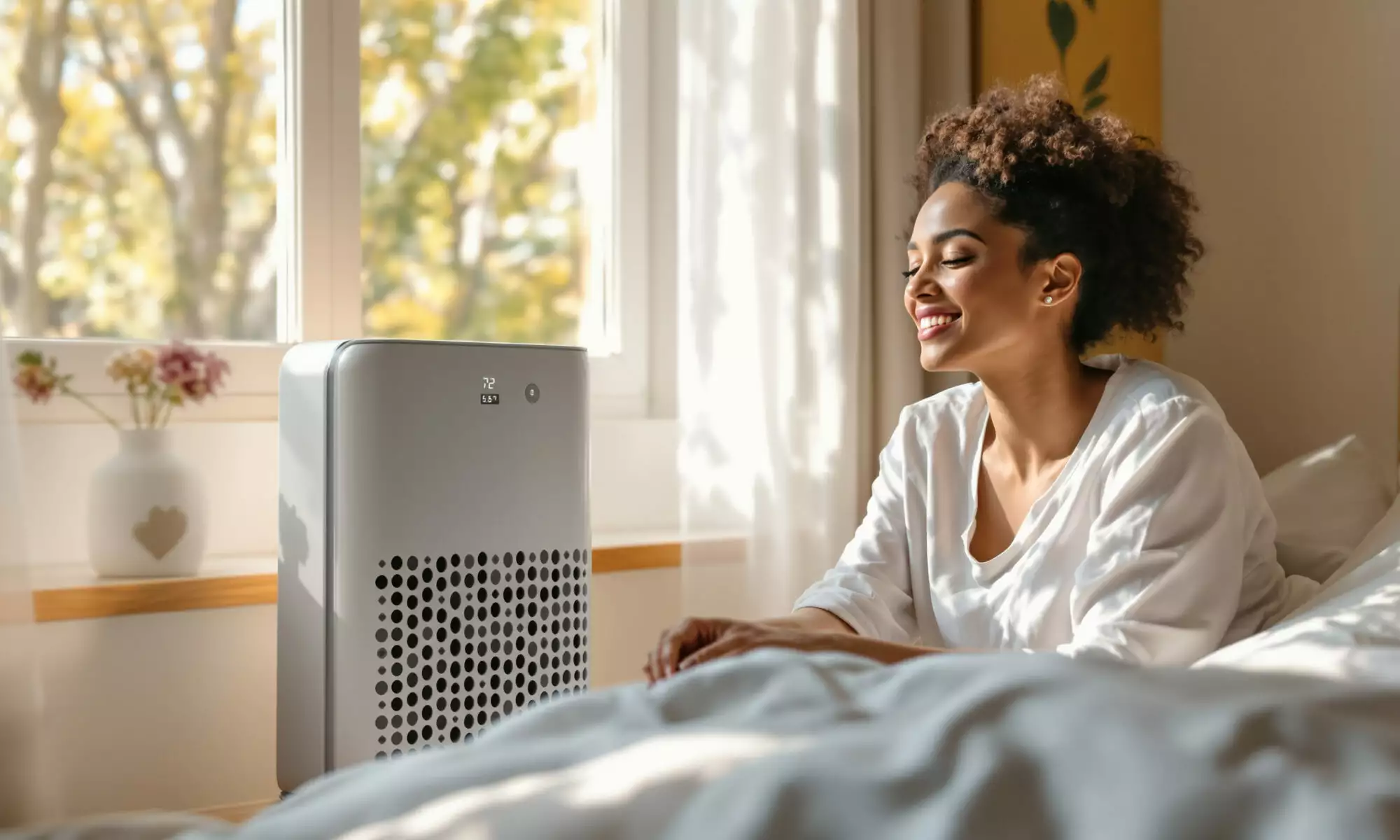
The best air purifier for allergies has enough clean air delivery rate, or CADR, for your room, effective particle filtration, tolerable noise and affordable replacement filters. For a 200-square-foot bedroom, look for a smoke CADR of at least 132 cubic feet per minute. Avoid ozone generators. A purifier can reduce airborne allergens, but it won’t replace cleaning, ventilation or medical treatment.
What makes an air purifier effective for allergies?
Start with particles. Pollen, pet dander, mold fragments and dust can remain suspended in indoor air, where a purifier may capture them before you breathe them. The best air purifier for allergies should move enough air through its filter repeatedly, rather than relying on an impressive filter percentage paired with a weak fan.
A true HEPA filter captures at least 99.97% of particles measuring 0.3 microns under its test conditions, according to the U.S. Environmental Protection Agency’s 2026 explanation of HEPA filtration. The agency identifies 0.3 microns as the most-penetrating particle size, which means particles that are somewhat larger or smaller may be captured at equal or higher rates.
Don’t read that 99.97% figure as the percentage of allergens removed from an entire room. It describes filter performance, not whole-room exposure. Air can bypass the unit, new pollen enters through doors and windows, and allergens settle on bedding, carpets and furniture.
Calculate the CADR your room needs
CADR measures how quickly a purifier supplies filtered air for a specified particle category. Under the Association of Home Appliance Manufacturers’ 2026 sizing rule, smoke CADR should be at least two-thirds of the room’s area when the ceiling is eight feet high.
The calculation is simple: multiply square footage by 0.67. A 12-by-15-foot bedroom covers 180 square feet, so 180 × 0.67 gives a minimum smoke CADR of about 121 CFM. A 300-square-foot room needs roughly 200 CFM.
| Room area | Minimum smoke CADR | Ceiling assumed |
|---|---|---|
| 150 ft² | 100 CFM | 8 feet |
| 200 ft² | 132 CFM | 8 feet |
| 300 ft² | 200 CFM | 8 feet |
| 400 ft² | 264 CFM | 8 feet |
| 600 ft² | 400 CFM | 8 feet |
High ceilings, open doorways and irregular floor plans weaken this shortcut because they increase the volume of air being treated. For a 12-foot ceiling, a reasonable sizing adjustment is to multiply the eight-foot result by 12 ÷ 8, or 1.5. That makes a 200-square-foot room closer to a 198-CFM requirement.
Manufacturer coverage claims aren’t always based on the same number of air changes per hour. CADR is usually the more useful comparison. In my view, choosing a slightly oversized purifier and running it quietly is often more practical than buying a barely adequate machine that must stay on its loudest setting.
Best air purifier for allergies: four models compared
No single model wins for every room. The comparison below uses specifications reported by manufacturers or their official manuals in October and November 2026. Prices are snapshots, not promises, and the available sources don’t support a complete annual-cost comparison for every model.
| Model | Smoke CADR | Reported room size | Noise | Unit price | Replacement filter information |
|---|---|---|---|---|---|
| Blueair Blue Pure 211i Max | 435 CFM | 674 ft² | 23–53 dB | $349.99 | Particle + Carbon filter: $69.99; interval not verified |
| Levoit Core 400S-P | 231 CFM | 403 ft² at 5 air changes/hour in manual | 24 dB minimum | $219.99 | $44.99 each; about $45–$90 yearly at 1–2 changes |
| Coway Airmega 240 | 282 CFM | 403 ft² at 4.8 air changes/hour | 21–51 dB | Current U.S. price unconfirmed | 1-year reported filter life; current price unconfirmed |
| Winix 5500-2 | Official room size: 370 ft² | 370 ft² verified | Official current figure unconfirmed | Current availability and price unclear | Filter H 116130; up to 12 months |
The Blueair has the highest reported smoke CADR here and is sized for a relatively large room, though its $349.99 purchase price is also the highest confirmed price in the group. Its standard filter costs $69.99, but no replacement interval was verified from the reviewed sources, so calculating an annual cost would be guesswork.
Levoit’s Core 400S-P presents an overlooked shopping problem: its current product page reports 231 CFM, while its manual reports 260 CFM. Use the lower, current product-page figure when comparing the best air purifier for allergies. Even at 231 CFM, it exceeds the AHAM minimum for roughly 345 square feet, calculated as 231 ÷ 0.67.
The Coway publishes separate reported ratings of 282 CFM for smoke, 292 for dust and 343 for pollen. Its current U.S. purchase price and official replacement-filter price couldn’t be confirmed reliably, which makes total ownership cost difficult to judge.
Winix’s official manual identifies a verified 370-square-foot room size and says its True HEPA and carbon filters can last up to 12 months. However, current new-unit availability and price are unclear. It’s more relevant to someone who already owns the 5500-2 or finds verifiable new stock than to a shopper demanding predictable support.
Check noise, filters and ozone before buying
The best air purifier for allergies is one you’ll actually run. The EPA says higher fan speeds and longer operating times increase the amount of air filtered, but a noisy unit often gets switched off at bedtime. Compare the full decibel range, not just the quietest sleep-mode claim.
Filter costs matter just as much. A $50 filter replaced twice a year adds $100 annually, or $500 over five years, before electricity. Check the model number, price and stated replacement interval before purchasing the machine; washable prefilters may catch larger debris, but they don’t turn a worn main filter into a new one.
- Match smoke CADR to at least two-thirds of room area, adjusting upward for ceilings above eight feet.
- Confirm what the filter claim actually says, especially if you specifically want true HEPA performance.
- Check noise at both low and high fan speeds.
- Calculate filter spending over three to five years, not just the unit’s sale price.
- Avoid products marketed as ozone generators and check California Air Resources Board certification for electronic models.
The EPA warns that ozone can harm the lungs and is generally ineffective for controlling indoor pollution at concentrations that meet public-health standards. California-certified portable cleaners must meet electrical-safety requirements; electronic models must also stay within an ozone-emissions limit of 0.050 parts per million, or 50 parts per billion. Certification is a safety screen, not proof that a purifier will relieve your symptoms.
Use filtration as one part of allergy control
Portable HEPA cleaners reduce airborne particles, and some clinical research reports improvements in certain allergy or asthma symptoms. The EPA’s 2026 review says those symptom gains aren’t consistent or universal. Trials differ in room conditions, exposure sources, purifier use and the symptoms measured, so particle reduction shouldn’t be mistaken for a guaranteed clinical benefit.
Honestly, the effect is often more modest than purifier marketing suggests. Filtration works best alongside source control: wash bedding, keep pets out of the bedroom if they trigger symptoms, address moisture and mold, and avoid bringing outdoor pollen onto pillows and upholstered furniture. You can also review practical ways to reduce pollen exposure and guidance for managing birch pollen allergy.
Cold season needs realistic expectations too. An air cleaner isn’t a substitute for ventilation, staying home when ill, hand hygiene or recommended vaccination. Choose the best air purifier for allergies for particle control, not because its packaging implies that it can prevent every respiratory infection.
If wheezing, breathlessness or persistent symptoms are affecting sleep or daily activity, speak with a qualified clinician. A purifier can complement an asthma or allergy plan, but it shouldn’t replace prescribed treatment or evaluation of indoor mold, pests and other triggers.
Frequently asked questions
What CADR do I need for a 200-square-foot room?
AHAM’s 2026 rule gives a minimum smoke CADR of about 132 CFM for a 200-square-foot room with an eight-foot ceiling. Choose a higher rating for taller ceilings, open rooms or quieter operation at a lower fan speed.
Is a HEPA purifier enough for pet allergies?
It can reduce airborne pet dander, but allergens also collect on fabric, floors and bedding. Keep the animal out of the bedroom when possible and combine filtration with regular cleaning.
Should I run an air purifier all night?
Longer runtime filters more air, according to 2026 EPA guidance. Use a speed quiet enough for sleep while still providing adequate CADR, and place the unit where furniture or curtains won’t block airflow.
Can an air purifier stop colds?
No purifier can guarantee that you won’t catch a cold. Particle filtration may be one layer of indoor air management, but ventilation and standard infection-prevention measures still matter.
How do I choose the best air purifier for allergies and asthma?
Prioritize adequate smoke CADR, effective particle filtration, low ozone emissions, manageable noise and replacement filters you can afford. If you have asthma, discuss persistent symptoms with your clinician rather than relying on a purifier alone.