

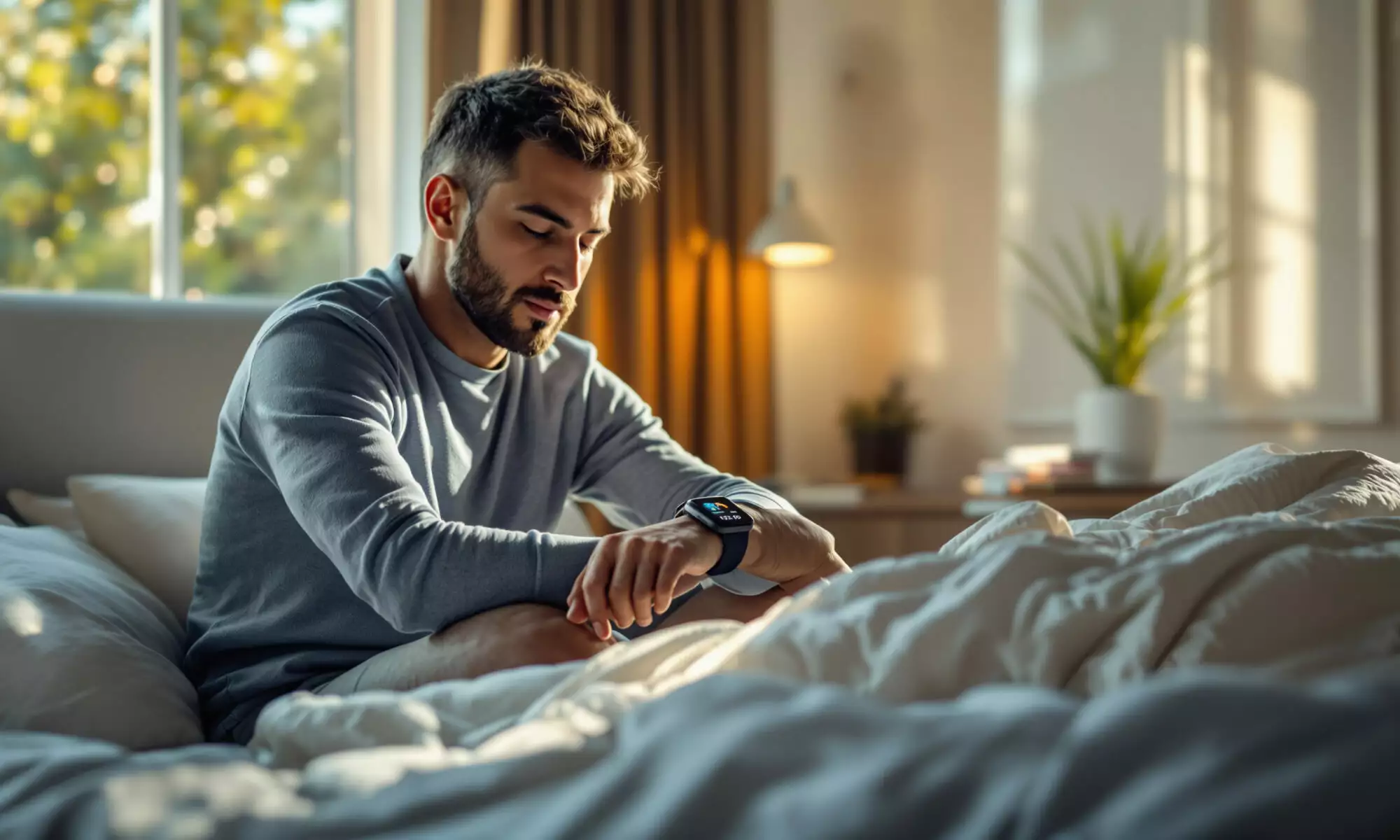
Sleep tracker accuracy is usually good enough to estimate when you fell asleep, woke up, and how long you slept. It’s much weaker at telling light, deep, and REM sleep apart. Use a tracker for trends, not diagnosis. If your watch says your sleep is terrible but you feel well, the device may be wrong. If you feel exhausted despite “good” numbers, trust your body first.
Sleep tracker accuracy: the useful truth
Most consumer sleep trackers use movement, heart rate, heart rate variability, skin temperature, and sometimes blood oxygen to estimate sleep. They don’t measure brain waves. That matters because the medical test used to score sleep stages, polysomnography, records brain activity, eye movement, muscle tone, airflow, breathing effort, oxygen levels, and heart rhythm.
A 2020 systematic review in Sleep Medicine Reviews found that many wearables can detect sleep versus wake reasonably well, but they tend to overestimate total sleep time and miss quiet wakefulness. In plain English: if you lie still in bed worrying, your tracker may count that as sleep. Sleep tracker accuracy is better for broad patterns than for minute-by-minute truth.
The strongest use is trend spotting. If your usual sleep duration drops from 7 hours 20 minutes to 5 hours 50 minutes for two weeks, that’s useful information, even if the exact nightly number is off. For broader context on how consumer devices fit into health habits, Healthy Life Vitality has also covered wearables and health apps in personal fitness.
What sleep trackers get right
Time in bed is the easy part. A wrist tracker usually knows when you’re wearing it, when you’re moving less, and when your heart rate settles. For many healthy adults with regular bedtimes, that gives a fair estimate of sleep schedule.
Several validation studies from 2019 to 2024 have compared devices from Apple, Fitbit, Garmin, Oura, Whoop, and others with polysomnography or research-grade actigraphy. Results vary by model and software version, but the pattern is consistent: sensitivity for detecting sleep is often high, while specificity for detecting wake is lower. In other words, wearables are better at saying “you were probably asleep” than “you were definitely awake.”
Sleep regularity is another strong signal. A tracker can show whether your bedtime swings by 2 hours on weekends, whether late alcohol changes your heart rate overnight, or whether a new work schedule cuts sleep short. For most people, that practical feedback is more valuable than a colorful sleep-stage chart.
Some devices also flag possible breathing irregularities using blood oxygen and motion data. Treat that as a nudge, not a diagnosis. If you snore loudly, wake choking or gasping, have morning headaches, or feel sleepy while driving, ask a qualified clinician about sleep apnea assessment rather than relying on a watch score.
Where the numbers go wrong
Sleep stages are the weak link. Your tracker may label 1 hour 42 minutes as deep sleep, but it is estimating from signals that only indirectly relate to brain activity. Polysomnography identifies stages using electroencephalography, or EEG, which consumer wrist devices don’t record.
A 2023 review of consumer sleep technology reported that sleep-stage agreement with lab scoring is mixed and often only moderate, especially for light sleep and deep sleep. REM may be estimated better than deep sleep in some devices because REM has a distinctive pattern of low movement and changing heart rate, but it’s still an estimate. Sleep tracker accuracy falls sharply when the question shifts from “were you asleep?” to “which stage were you in?”
Algorithms are also moving targets. A device that performs one way in a 2021 validation study may behave differently after a 2024 software update. Companies rarely publish enough detail for readers to know what changed. Honestly, that lack of transparency is one reason the marketing often runs ahead of the evidence.
| Measure | Typical wearable performance | Best comparison standard | Main caveat |
|---|---|---|---|
| Sleep vs wake | Often high sleep detection in 2019-2024 validation studies | Polysomnography or actigraphy | Quiet wakefulness often counted as sleep |
| Total sleep time | Common error of tens of minutes in device studies | Polysomnography | Overestimation is frequent |
| REM sleep | Variable; sometimes moderate agreement | EEG-based sleep staging | Heart rate patterns are indirect |
| Deep sleep | Often weaker agreement than sleep duration | EEG slow-wave scoring | No consumer wrist EEG signal |
| Sleep apnea risk | Screening signal only | Home sleep apnea test or polysomnography | Cannot rule disease in or out |
How to use a tracker without being misled
The most sensible approach is boring: compare you with you. Don’t compare your deep sleep score with a friend’s score, a social media benchmark, or a generic “ideal” pushed by an app. Different devices use different algorithms, and even the same device may change after updates.
A simple calculation helps. Take your average sleep duration across 14 nights, not one night. If the tracker reports 6 hours 30 minutes on average, and you spend 8 hours in bed, your sleep efficiency estimate is 6.5 divided by 8, or 81%. Sleep specialists often view sleep efficiency below about 85% as a sign worth discussing in context, but it isn’t a diagnosis by itself.
- Track the same 2 or 3 metrics for at least 2 weeks: sleep duration, wake time, and bedtime regularity.
- Ignore small nightly changes in deep sleep or REM sleep, especially changes under 20 to 30 minutes.
- Write down caffeine, alcohol, illness, travel, stress, and late exercise when a night looks unusual.
- Act on patterns that match how you feel: daytime sleepiness, low mood, headaches, or poor concentration.
- Seek medical advice if symptoms persist, especially with loud snoring, breathing pauses, chest symptoms, pregnancy, shift work strain, or a mental health crisis.
Technology can support better habits, but it doesn’t replace judgment. Our broader reporting on health technology advances makes the same point: useful data is only useful when interpreted with limits in mind.
Orthosomnia: when tracking makes sleep worse
Orthosomnia is the term researchers use for unhealthy preoccupation with getting “perfect” sleep data. It was described in a 2017 paper in the Journal of Clinical Sleep Medicine, based on patients who became anxious or changed behavior because of tracker scores. The condition isn’t a formal diagnosis in the DSM-5-TR, but the pattern is real enough for sleep clinicians to recognize.
The trap is easy to miss. You wake up feeling fine, then the app gives you a poor score, and suddenly you feel as if the day is damaged. That can raise worry at bedtime, which can then worsen sleep. One rhetorical question is enough here: who is really in charge, you or the score?
People with insomnia, health anxiety, obsessive-compulsive symptoms, eating disorders, or high stress may be more vulnerable. If tracking makes you anxious, try taking the device off for 1 to 2 weeks and judging sleep by daytime function instead. Mental health matters here; related guidance on stepping back from apps for a digital reset may be relevant if tracking has become compulsive.
Who benefits most, and who should be cautious?
Sleep trackers are most helpful for people trying to stabilize routines: new parents after the most chaotic phase, shift workers monitoring schedule changes, athletes watching recovery trends, or anyone testing whether late caffeine or alcohol affects sleep. A tracker can also support conversations with a clinician by showing a dated pattern.
They are less reliable for people with fragmented sleep, restless legs syndrome, untreated sleep apnea, chronic insomnia, parasomnias, or irregular sleep-wake rhythm disorders. Motion and heart rate patterns can be confusing in these groups. Sleep tracker accuracy may look polished on the screen while being clinically shaky.
Children are another edge case. Many consumer devices are validated mainly in adults, not children or teens. Pregnancy, menopause symptoms, fever, some heart rhythm problems, and medications that affect heart rate can also distort estimates. For readers interested in how apps may evolve, the magazine’s coverage of future health app development is a useful companion, but current devices still have limits.
Choosing sleep data that matters
Don’t buy a tracker because it promises perfect sleep-stage insight. Buy, or keep using, one only if it helps you make calmer decisions: going to bed earlier, keeping a steadier wake time, reducing alcohol near bedtime, or noticing a pattern worth discussing. The best health technology tends to make you less obsessed, not more.
If you already own a device, check whether it has published validation data against polysomnography or actigraphy, and whether that research involved adults like you. A study of 25 healthy young adults doesn’t automatically apply to a 62-year-old with sleep apnea symptoms. Sample size and population matter.
For most healthy adults, sleep tracker accuracy is good enough for rough sleep duration and weak for precise sleep architecture. Treat the stage chart as a weather forecast, not a lab report. If the data helps you protect sleep, keep it. If it makes you chase scores, leave it on the charger.
FAQ
Are sleep trackers accurate for deep sleep?
Not very. Deep sleep is defined by brain-wave patterns on EEG, while most consumer trackers estimate it from movement and heart rate. Use deep sleep numbers as rough trends, not facts.
Can a sleep tracker diagnose sleep apnea?
No. Some devices can flag possible breathing changes or oxygen drops, but diagnosis requires a home sleep apnea test or polysomnography ordered through a clinician.
Why does my sleep tracker say I slept well when I feel tired?
It may have missed awakenings, counted quiet rest as sleep, or failed to capture sleep quality issues such as pain, stress, alcohol effects, or breathing problems. Your symptoms matter more than the score.
Is it better to track sleep every night?
Nightly tracking can help identify patterns, but it isn’t necessary for everyone. If it increases anxiety or bedtime checking, periodic tracking or no tracking may be healthier.
{“@context”:”https://schema.org”,”@type”:”FAQPage”,”mainEntity”:[{“@type”:”Question”,”name”:”Are sleep trackers accurate for deep sleep?”,”acceptedAnswer”:{“@type”:”Answer”,”text”:”Not very. Deep sleep is defined by brain-wave patterns on EEG, while most consumer trackers estimate it from movement and heart rate. Use deep sleep numbers as rough trends, not facts.”}},{“@type”:”Question”,”name”:”Can a sleep tracker diagnose sleep apnea?”,”acceptedAnswer”:{“@type”:”Answer”,”text”:”No. Some devices can flag possible breathing changes or oxygen drops, but diagnosis requires a home sleep apnea test or polysomnography ordered through a clinician.”}},{“@type”:”Question”,”name”:”Why does my sleep tracker say I slept well when I feel tired?”,”acceptedAnswer”:{“@type”:”Answer”,”text”:”It may have missed awakenings, counted quiet rest as sleep, or failed to capture sleep quality issues such as pain, stress, alcohol effects, or breathing problems. Your symptoms matter more than the score.”}},{“@type”:”Question”,”name”:”Is it better to track sleep every night?”,”acceptedAnswer”:{“@type”:”Answer”,”text”:”Nightly tracking can help identify patterns, but it isn’t necessary for everyone. If it increases anxiety or bedtime checking, periodic tracking or no tracking may be healthier.”}}],”@id”:”https://www.healthylifevitality.com/?p=2576/#faq”}