

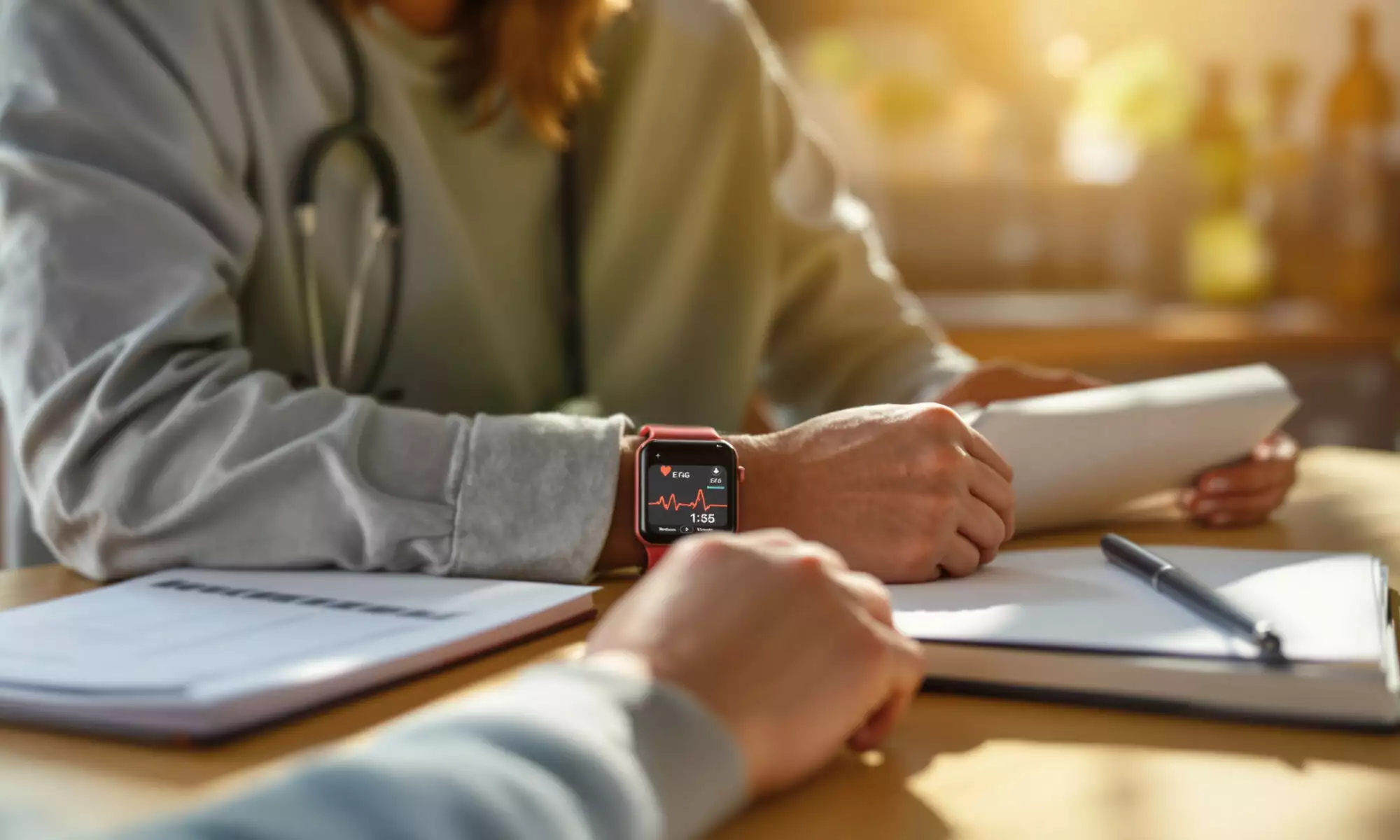
Short answer: apple watch ecg accuracy afib is good when the watch records a clean 30-second tracing during symptoms, but it isn’t a full heart monitor. It can help flag possible atrial fibrillation, especially in adults with risk factors, yet false positives, missed episodes, and unreadable recordings are common enough that a clinician should confirm any concerning result with medical-grade testing.
Apple Watch ECG accuracy AFib: what the data actually says
The Apple Watch ECG is a single-lead electrocardiogram. That means it records one electrical view of the heart, roughly similar to lead I on a standard 12-lead ECG used in clinics and emergency departments. It’s not measuring every angle of heart activity.
For atrial fibrillation, that limitation matters less than it would for a heart attack diagnosis. AFib is mainly recognized by an irregularly irregular rhythm and missing organized P waves, and a single lead can often show that pattern if the recording is clean.
Apple’s FDA-cleared ECG app was supported by a 2018 clinical validation study submitted to regulators, in which the app showed high sensitivity and specificity for classifying AFib versus sinus rhythm in people who produced classifiable tracings. Public FDA documents reported sensitivity around 98% and specificity around 99% in that selected setting. Those numbers are useful, but they don’t mean the watch is 99% right for every person using it on a couch after coffee.
The harder real-world question is apple watch ecg accuracy afib when recordings are noisy, the user is younger, symptoms are caused by premature beats, or AFib comes and goes. A 2019 Apple Heart Study, published in the New England Journal of Medicine, enrolled more than 419,000 participants and looked at irregular pulse notifications rather than the ECG app itself. Only 0.52% received a notification, and among those who returned an ECG patch, 34% had AFib detected on the patch. Useful signal, yes. A diagnosis by itself, no.
How the ECG feature differs from irregular rhythm notifications
Two Apple Watch heart features often get mixed together. The ECG app requires you to open it, place a finger on the Digital Crown, and record for 30 seconds. It then labels the tracing as sinus rhythm, AFib, low or high heart rate, inconclusive, or poor recording.
Irregular rhythm notifications work in the background using the optical heart sensor, not the ECG electrodes. The watch checks pulse patterns at rest and may notify you if repeated readings suggest an irregular rhythm consistent with AFib.
That distinction changes the medical value. The ECG app gives a short rhythm strip you can export as a PDF and show a clinician. The notification system is more like a screening flag. It tells you, “something may be happening often enough to check,” not “you have AFib.”
For health technology readers, this is where wearable medicine gets interesting. Consumer sensors can capture events that never appear during a 10-minute clinic visit, but the same convenience also creates ambiguous data. If notifications are making you check your wrist dozens of times a day, Healthy Life Vitality’s piece on stepping back from phone-driven overload is a useful parallel: more data isn’t always more calm.
What counts as a reliable reading?
A reliable watch ECG starts with a boring setup. Sit still, rest your arm on a table, keep the watch snug, and avoid talking or moving during the 30-second recording. Motion artifact is one of the most ordinary reasons a tracing becomes unreadable or misleading.
The watch is also not designed for everyone. Apple’s ECG app is cleared for adults aged 22 and older in many markets, and it isn’t intended to detect heart attacks, blood clots, stroke, or every abnormal rhythm. If you have chest pain, fainting, severe shortness of breath, stroke symptoms, or a new sustained rapid heartbeat, don’t wait for a wearable to sort it out.
Here’s a practical way to think about apple watch ecg accuracy afib. The watch is strongest when AFib is happening during the recording. It is weakest when symptoms are brief, the rhythm has already returned to normal, or the problem isn’t AFib at all.
| Tool or result | What it captures | Typical time window | Best use |
|---|---|---|---|
| Apple Watch ECG app | Single-lead ECG rhythm strip | 30 seconds | Documenting possible AFib during symptoms |
| Apple Watch irregular rhythm notification | Optical pulse pattern | Multiple background checks over hours | Screening for repeated irregular pulse patterns at rest |
| Clinic 12-lead ECG | 12 electrical views of the heart | About 10 seconds | Medical diagnosis of rhythm and other heart findings |
| Holter monitor | Continuous ECG recording | 24 to 48 hours | Frequent symptoms or daily rhythm episodes |
| Patch monitor | Continuous or near-continuous ECG recording | 7 to 14 days | Intermittent palpitations or suspected paroxysmal AFib |
False positives, false reassurance, and the age problem
False positives are not a minor footnote. They are one of the main issues with AFib screening in people who have a low chance of having the condition. Younger adults with anxiety, dehydration, caffeine use, intense exercise, or premature atrial or ventricular beats may feel palpitations and get a confusing result that isn’t AFib.
Pre-test probability is the overlooked caveat. If AFib is rare in your age group, even a good test can produce a surprising share of false alarms. For example, if 1 out of 1,000 low-risk people actually has AFib and a test is 98% sensitive and 99% specific, it may correctly catch about 1 true case but falsely flag about 10 people. In that simplified calculation, most positive results would be false positives.
In an older group with hypertension, diabetes, sleep apnea, prior stroke, or heart failure, the math changes. If 50 out of 1,000 people have AFib, the same test would catch about 49 true cases and falsely flag about 10 people. Now a positive result is far more likely to be meaningful.
False reassurance cuts the other way. A normal 30-second tracing doesn’t rule out paroxysmal AFib, which can appear and disappear. If your symptoms are frequent or you have stroke risk factors, a clinician may order a Holter or patch monitor even if the watch says sinus rhythm.
When a wearable ECG has real medical value
The strongest use case is capturing a rhythm at the moment you feel palpitations, fluttering, unexplained fatigue, or a racing heartbeat. A saved tracing can help your doctor decide whether the rhythm looks like AFib, premature beats, atrial flutter, supraventricular tachycardia, or something else.
Wearable ECG can also be helpful after an AFib diagnosis, but with guardrails. Some patients use it to document possible recurrences after treatment, cardioversion, or ablation. That information can guide a conversation, but it should not drive medication changes without a clinician, especially anticoagulants or rhythm drugs.
Screening is more contested. The 2022 U.S. Preventive Services Task Force found insufficient evidence to recommend routine AFib screening with ECG in asymptomatic adults, largely because benefits and harms are still uncertain. European and UK guidance has generally been more open to targeted detection in older or higher-risk adults, but not to careless mass screening of everyone with a smartwatch.
Honestly, the evidence supports wearables as a good detection aid, not as a standalone heart clinic on your wrist. The medical value comes from combining the tracing with your age, symptoms, stroke risk, medications, and a proper exam.
What to do after an AFib alert or inconclusive ECG
If you receive an AFib result, save the PDF and note what you were doing, your symptoms, and your approximate heart rate. One isolated alert in a well person is not the same as repeated alerts with dizziness or shortness of breath.
Use the result as a reason to get the right level of care, not as a reason to panic. A primary care doctor, cardiologist, or electrophysiology specialist can review the tracing and decide whether you need a 12-lead ECG, blood tests, thyroid testing, sleep apnea assessment, or longer monitoring.
- Seek urgent care now if you have chest pressure, fainting, stroke symptoms, severe breathlessness, or a very fast sustained heart rate.
- Book medical review soon if the watch repeatedly reports AFib, especially if you’re over 65 or have high blood pressure, diabetes, heart disease, sleep apnea, or prior stroke.
- Bring context: exported ECG PDFs, symptom times, alcohol intake, exercise, illness, caffeine, and any heart or thyroid medications.
- Don’t self-adjust treatment, including blood thinners, beta blockers, or antiarrhythmic drugs, based only on a watch reading.
Lifestyle still matters, but not in a magical way. Alcohol binges, poor sleep, untreated high blood pressure, and sleep apnea are well-recognized AFib triggers or risk factors. For broader prevention habits, our coverage of healthier food standards and long-term disease prevention and daily habits linked with better well-being may be more relevant than another sensor feature.
Who should and shouldn’t rely on Apple Watch AFib detection?
Apple watch ecg accuracy afib is most useful for adults who have intermittent palpitations, known AFib, or risk factors that make an abnormal rhythm more likely. It can also help people who struggle to describe brief symptoms during appointments because the tracing gives the clinician something concrete to inspect.
It applies less well to children, people under the cleared age range, endurance athletes with unusual resting rhythms, and anyone with implanted cardiac devices unless their cardiology team has discussed how to interpret wearable readings. It also doesn’t replace a medical monitor after a stroke or transient ischemic attack when doctors are actively searching for silent AFib.
Pregnancy is another edge case. Palpitations are common during pregnancy and often benign, but new AFib or sustained tachycardia needs proper evaluation because both the parent and fetus are part of the risk assessment. A smartwatch tracing may be helpful to show, but it shouldn’t be the final word.
For most people, the fairest answer is simple: the Apple Watch ECG is accurate enough to take seriously and limited enough to verify. Treat it as a smart note-taker for your heart rhythm, not as a diagnosis machine.
FAQ
Can Apple Watch ECG diagnose AFib?
It can classify a 30-second single-lead tracing as suggestive of AFib, but a medical diagnosis should be confirmed by a qualified clinician using the tracing, symptoms, risk factors, and often a clinical ECG or longer monitor.
How accurate is Apple Watch for AFib compared with a Holter monitor?
The watch can be accurate during a clean 30-second recording, while a Holter records continuously for 24 to 48 hours. Holter or patch monitoring is better when episodes are intermittent or symptoms don’t happen during the watch ECG.
Can Apple Watch miss atrial fibrillation?
Yes. It can miss AFib if the episode occurs when you’re not recording, if the tracing is poor, or if the rhythm is hard to classify. A normal result doesn’t rule out occasional AFib.
Why does my Apple Watch say inconclusive?
Common reasons include movement, a loose watch, heart rate outside the app’s classification range, premature beats, or rhythms other than AFib. Repeated inconclusive readings are worth discussing with a clinician.
Should I buy an Apple Watch just to screen for AFib?
If you’re young and low-risk with no symptoms, routine screening may offer little benefit and can create false alarms. If you’re older, have risk factors, or have palpitations, the ECG feature may be useful as part of medical follow-up.
{“@context”:”https://schema.org”,”@type”:”FAQPage”,”mainEntity”:[{“@type”:”Question”,”name”:”Can Apple Watch ECG diagnose AFib?”,”acceptedAnswer”:{“@type”:”Answer”,”text”:”It can classify a 30-second single-lead tracing as suggestive of AFib, but a medical diagnosis should be confirmed by a qualified clinician using the tracing, symptoms, risk factors, and often a clinical ECG or longer monitor.”}},{“@type”:”Question”,”name”:”How accurate is Apple Watch for AFib compared with a Holter monitor?”,”acceptedAnswer”:{“@type”:”Answer”,”text”:”The watch can be accurate during a clean 30-second recording, while a Holter records continuously for 24 to 48 hours. Holter or patch monitoring is better when episodes are intermittent or symptoms don’t happen during the watch ECG.”}},{“@type”:”Question”,”name”:”Can Apple Watch miss atrial fibrillation?”,”acceptedAnswer”:{“@type”:”Answer”,”text”:”Yes. It can miss AFib if the episode occurs when you’re not recording, if the tracing is poor, or if the rhythm is hard to classify. A normal result doesn’t rule out occasional AFib.”}},{“@type”:”Question”,”name”:”Why does my Apple Watch say inconclusive?”,”acceptedAnswer”:{“@type”:”Answer”,”text”:”Common reasons include movement, a loose watch, heart rate outside the app’s classification range, premature beats, or rhythms other than AFib. Repeated inconclusive readings are worth discussing with a clinician.”}},{“@type”:”Question”,”name”:”Should I buy an Apple Watch just to screen for AFib?”,”acceptedAnswer”:{“@type”:”Answer”,”text”:”If you’re young and low-risk with no symptoms, routine screening may offer little benefit and can create false alarms. If you’re older, have risk factors, or have palpitations, the ECG feature may be useful as part of medical follow-up.”}}],”@id”:”https://www.healthylifevitality.com/?p=2578/#faq”}