

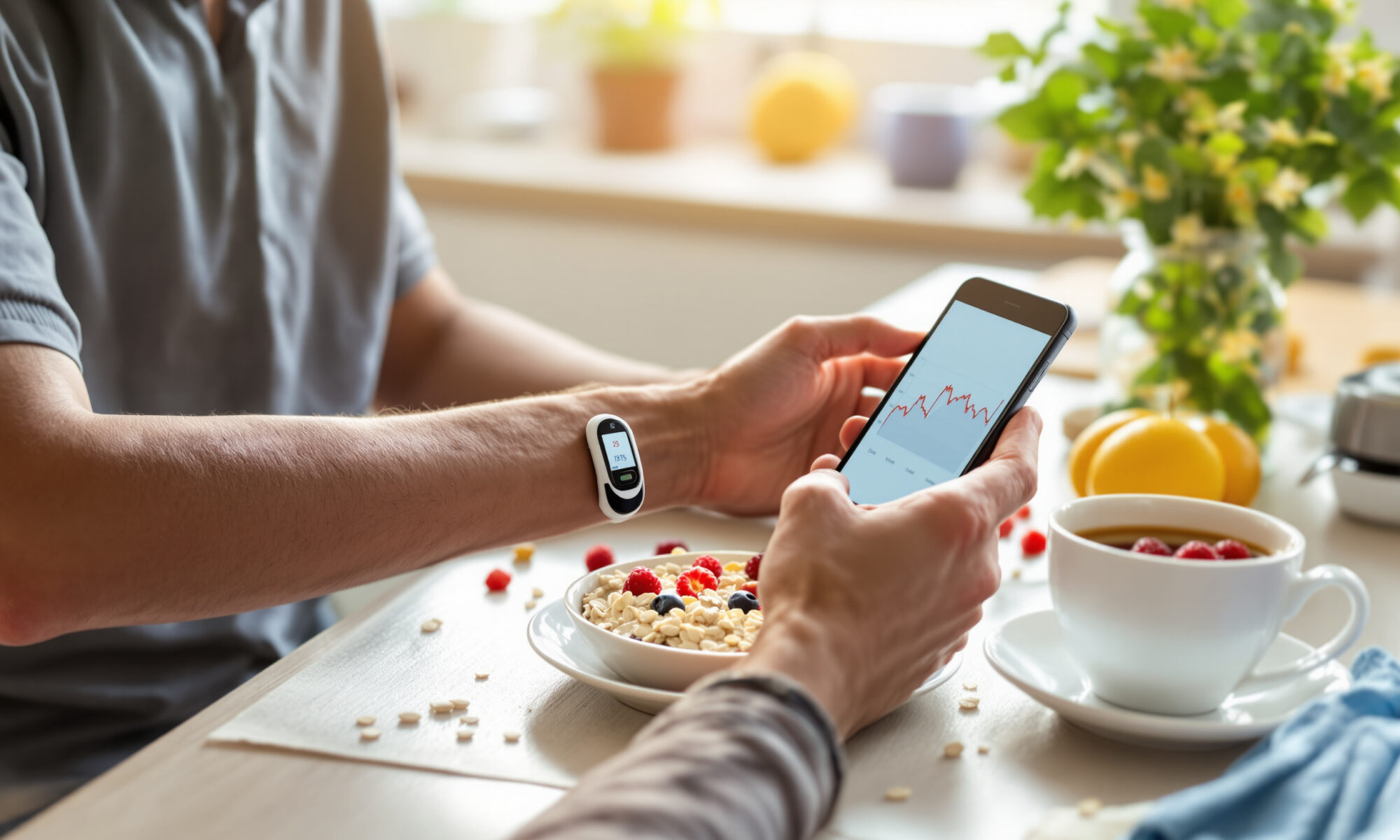
A continuous glucose monitor non-diabetic can be useful in 2026 if you have prediabetes, a strong family history of type 2 diabetes, frequent post-meal crashes, or you’re testing how specific meals affect you. For most healthy adults, it’s more curiosity tool than medical necessity. The best choice is usually an over-the-counter sensor such as Stelo or Lingo, not a prescription diabetes CGM.
Continuous glucose monitor non-diabetic use: who actually benefits?
The phrase continuous glucose monitor non-diabetic now covers two very different groups: people with real metabolic risk and healthy people buying data because it feels empowering. Those aren’t the same use case.
If your A1C is in the prediabetes range, your waist measurement has been creeping up, or you’ve had gestational diabetes in the past, two to four weeks of CGM data may show patterns a fasting blood test misses. A normal fasting glucose can sit beside high after-meal spikes, especially after a large refined-carb meal.
For a healthy endurance athlete, wellness hobbyist, or desk worker with normal labs, the payoff is less clear. Honestly, the evidence here is thinner than the marketing suggests. CGMs can teach you that sleep, stress, food order, and walking after meals matter, but they don’t prove that every short glucose rise is harmful.
Current American Diabetes Association Standards of Care, updated yearly, strongly support CGMs for many people with diabetes, especially those using insulin. They do not recommend routine CGM use for the general non-diabetic population. That gap matters.
Best CGM options for non-diabetics in 2026
The consumer market changed because the FDA cleared the first over-the-counter CGMs in 2024. Dexcom Stelo and Abbott Lingo are designed for people who don’t use insulin and want trend data without a prescription. They’re easier to access, but they’re still medical sensors, not lifestyle jewelry.
A prescription CGM such as Dexcom G7 or Abbott FreeStyle Libre 3 Plus may be appropriate if your clinician is investigating hypoglycemia, prediabetes progression, or medication effects. Don’t use a CGM result to stop medication, diagnose diabetes, or start an extreme diet without a qualified clinician’s input, especially if you’re pregnant, have an eating disorder history, or have symptoms such as fainting, excessive thirst, or unexplained weight loss.
| Device | Access in the U.S. | Wear time | Approximate 2025-2026 cash price | Best fit |
|---|---|---|---|---|
| Dexcom Stelo | FDA-cleared OTC, 2024 | Up to 15 days | $89 monthly subscription or $99 for 2 sensors | Adults 18+ not using insulin |
| Abbott Lingo | FDA-cleared OTC, 2024 | Up to 14 days | About $49 for 2 weeks, $89 for 4 weeks, $249 for 12 weeks | Adults 18+ without diabetes |
| Dexcom G7 | Prescription | Up to 10 days plus 12-hour grace period | Common cash prices often $170-$400 monthly | Diabetes care or clinician-directed monitoring |
| FreeStyle Libre 3 Plus | Prescription | Up to 15 days | Common cash prices often $75-$160 monthly | Diabetes care or clinician-directed monitoring |
Prices move. Pharmacy discounts, insurance rules, and direct-to-consumer subscriptions can change the monthly cost by a lot. Treat the numbers above as a budgeting range, not a guarantee.
What the numbers mean, and what they don’t
A continuous glucose monitor non-diabetic reads glucose in the fluid between your cells, not directly from blood. That creates a lag of roughly 5 to 15 minutes during fast changes, such as after a sugary drink, hard exercise, or a sudden drop.
Normal fasting blood glucose is generally below 100 mg/dL. Prediabetes is usually defined as fasting glucose from 100 to 125 mg/dL, or A1C from 5.7% to 6.4%, using CDC and ADA criteria. Diabetes is generally diagnosed at fasting glucose of 126 mg/dL or higher, A1C of 6.5% or higher, or a 2-hour oral glucose tolerance test of 200 mg/dL or higher, confirmed when appropriate.
Here’s the overlooked caveat: a CGM can look alarming even when your lab tests are normal. A short rise to 150 or 160 mg/dL after a high-carb meal is not automatically disease. The pattern matters more than one peak: how often it happens, how long it lasts, and whether your glucose returns near baseline.
A simple calculation helps. If your glucose rises from 90 to 155 mg/dL after lunch and returns to 100 mg/dL in two hours, that’s a 65 mg/dL rise with recovery. If the same meal leaves you around 150 mg/dL for four hours, that’s a different signal and worth discussing if it repeats.
Accuracy, false alarms, and sensor limits
CGMs are impressive. They’re not lab instruments. Published accuracy for prescription CGMs is often summarized with MARD, or mean absolute relative difference, where lower is better. Many current diabetes CGMs report MARD values around 8% to 10% in manufacturer-submitted or clinical accuracy studies, depending on device, population, and glucose range.
That means a reading of 100 mg/dL may not truly be 100. It might be closer to the low 90s or around 110, and accuracy can worsen during rapid changes or at very low glucose values. For a person with diabetes dosing insulin, those differences can be medically significant; for a non-diabetic user, they can still create needless worry.
Pressure lows are another common trap. If you sleep on the sensor, the app may show a low reading that reflects compressed tissue rather than true hypoglycemia. Hydration, sensor placement, skin irritation, and the first 12 to 24 hours of wear can also affect readings.
A continuous glucose monitor non-diabetic should be interpreted as a trend tool. If a value is unexpected or doesn’t match how you feel, a finger-stick meter is still the practical cross-check. That old technology has not become obsolete.
How to use a CGM without getting obsessive
The smartest non-diabetic use is time-limited. Two sensors, worn for about one month, can answer many practical questions without turning every snack into a moral event.
- Pick a normal week first, not a “perfect” week.
- Track meals, sleep, exercise, alcohol, and stress for 14 to 28 days.
- Compare similar meals: rice alone versus rice after vegetables and protein, or breakfast before versus after a walk.
- Look for repeated patterns, not single spikes.
- Stop if the data increases food fear, restriction, or compulsive checking.
For many people, the most useful lesson is boring and powerful: a 10- to 20-minute walk after a carb-heavy meal often lowers the glucose curve. Randomized trials and small crossover studies have supported post-meal walking for glucose control, including in people at risk of type 2 diabetes, although the size of the effect varies.
Food order can matter too. Smaller studies have found that eating vegetables and protein before refined carbohydrates can reduce post-meal glucose peaks. It’s not magic. It’s slower digestion, delayed stomach emptying, and less rapid glucose absorption.
If you’re using CGM data to improve daily routines, you may also care about broader food policy and prevention. Healthy Life Vitality has covered new school meal rules aimed at healthier eating and SNAP restrictions on junk food purchases, both of which show how individual choices sit inside a much bigger food system.
When CGM data helps, and when it misleads
A continuous glucose monitor non-diabetic may help you spot that your “healthy” smoothie behaves like dessert, or that poor sleep makes the next day’s breakfast spike higher. Those are useful observations. They’re also context-dependent.
Stress hormones can raise glucose even if you eat the same meal. Menstrual cycle phase can shift insulin sensitivity. Intense exercise may cause a temporary glucose rise because your liver releases stored fuel. That doesn’t mean the workout was bad.
The biggest risk is overcorrection. Some users start cutting fruit, beans, oats, or whole grains because they dislike seeing any rise. That’s a mistake. Large cohort studies consistently link higher intake of fiber-rich plant foods with lower long-term risk of type 2 diabetes and heart disease, even though those foods can raise glucose after a meal.
For most people, a CGM matters less than sleep, blood pressure, smoking status, muscle strength, and a sustainable eating pattern. If the sensor nudges you toward walking, balanced meals, and earlier sleep, good. If it pushes you toward anxiety or a narrower diet, it’s the wrong tool.
Tech can support health, but it can also keep you staring at your phone. If you’re trying to set boundaries around apps and constant tracking, this piece on taking a digital detox from social media is a useful counterweight. Mental well-being is part of metabolic health, not a separate project.
So, which device should you choose?
If you’re a healthy adult who wants a short experiment, the best continuous glucose monitor non-diabetic option is usually an OTC product: Stelo if you want a simpler glucose-health display, Lingo if you prefer a consumer wellness interface. Choose based on cost, phone compatibility, wear time, and how much raw data you want.
If you have diagnosed diabetes, use insulin, are pregnant, or have recurrent low-glucose symptoms, don’t buy around medical care. Prescription CGMs have clearer clinical pathways, alarm options, and clinician support. A consumer device may not be designed for your risk level.
One more point: the “best” monitor is the one you can stop using. A good CGM experiment should leave you with two or three habits you can keep after the sensor comes off. More data is not always more health.
For prevention-minded readers, the larger goal is still straightforward: regular movement, enough sleep, less ultra-processed food, more fiber, and timely screening. If tracking makes those easier, use it. If it distracts you from them, skip it.
FAQ
Can a non-diabetic use a continuous glucose monitor?
Yes. Since 2024, FDA-cleared over-the-counter CGMs have made this possible for many adults without a prescription. The data is most useful when you have a specific question, such as how meals, sleep, or exercise affect your glucose.
What is a normal CGM reading for someone without diabetes?
Many non-diabetic adults spend most of the day roughly between 70 and 140 mg/dL, but brief post-meal rises can happen. Lab tests such as fasting glucose and A1C remain the standard tools for diagnosis.
Is Stelo or Lingo better for non-diabetics?
Stelo is aimed at adults not using insulin, including people with type 2 diabetes who don’t need insulin, while Lingo is marketed to adults without diabetes. For a non-diabetic wellness trial, compare price, app style, phone compatibility, and how many weeks you actually plan to wear it.
Can a CGM diagnose prediabetes?
No. A CGM can show patterns that suggest you should get checked, but prediabetes is diagnosed with blood tests such as fasting glucose, A1C, or an oral glucose tolerance test using accepted clinical cutoffs.
{“@context”:”https://schema.org”,”@type”:”FAQPage”,”mainEntity”:[{“@type”:”Question”,”name”:”Can a non-diabetic use a continuous glucose monitor?”,”acceptedAnswer”:{“@type”:”Answer”,”text”:”Yes. Since 2024, FDA-cleared over-the-counter CGMs have made this possible for many adults without a prescription. The data is most useful when you have a specific question, such as how meals, sleep, or exercise affect your glucose.”}},{“@type”:”Question”,”name”:”What is a normal CGM reading for someone without diabetes?”,”acceptedAnswer”:{“@type”:”Answer”,”text”:”Many non-diabetic adults spend most of the day roughly between 70 and 140 mg/dL, but brief post-meal rises can happen. Lab tests such as fasting glucose and A1C remain the standard tools for diagnosis.”}},{“@type”:”Question”,”name”:”Is Stelo or Lingo better for non-diabetics?”,”acceptedAnswer”:{“@type”:”Answer”,”text”:”Stelo is aimed at adults not using insulin, including people with type 2 diabetes who don’t need insulin, while Lingo is marketed to adults without diabetes. For a non-diabetic wellness trial, compare price, app style, phone compatibility, and how many weeks you actually plan to wear it.”}},{“@type”:”Question”,”name”:”Can a CGM diagnose prediabetes?”,”acceptedAnswer”:{“@type”:”Answer”,”text”:”No. A CGM can show patterns that suggest you should get checked, but prediabetes is diagnosed with blood tests such as fasting glucose, A1C, or an oral glucose tolerance test using accepted clinical cutoffs.”}}],”@id”:”https://www.healthylifevitality.com/?p=2562/#faq”}