

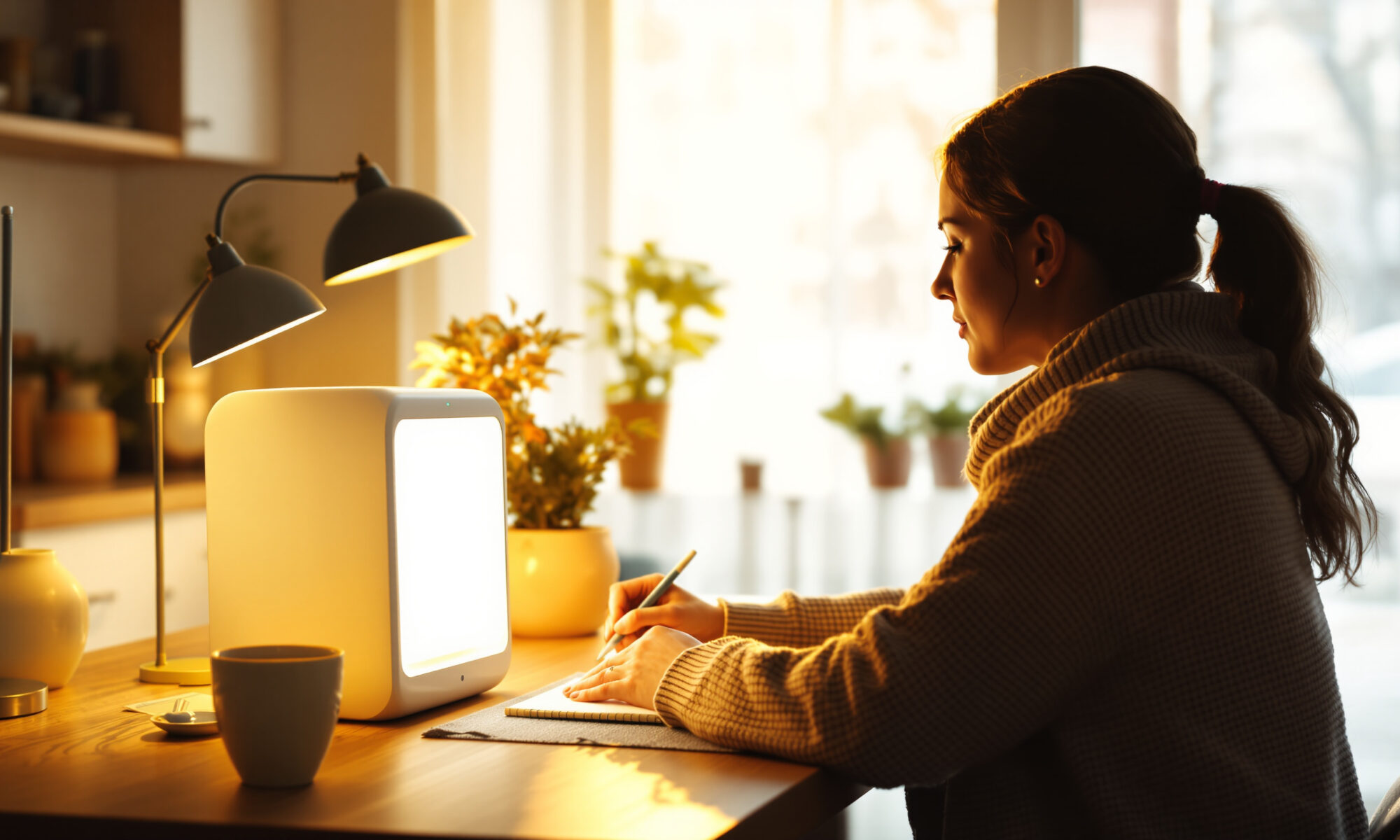
Seasonal affective disorder treatment usually starts with morning light therapy, better sleep timing, and a check for depression symptoms that need clinical care. A 10,000-lux light box used for about 20 to 30 minutes soon after waking has the best evidence among non-drug options. Vitamin D may help if you’re deficient, but it isn’t a stand-alone treatment for winter depression.
Seasonal affective disorder treatment: what actually helps?
Seasonal affective disorder, often shortened to SAD, is a pattern of major depression that returns during particular seasons, most often fall and winter. The symptoms are not just disliking dark weather. People can develop low mood, loss of interest, oversleeping, carbohydrate cravings, weight gain, low energy, and trouble concentrating.
The strongest seasonal affective disorder treatment options are bright light therapy, cognitive behavioral therapy adapted for SAD, and antidepressant medication when symptoms are moderate to severe. These are not interchangeable for every person. Your past depression history, bipolar disorder risk, eye health, medications, work schedule, and pregnancy status can change the safest plan.
Light therapy is the practical first step many clinicians discuss because it’s fast acting for some people and doesn’t require a prescription in many countries. Still, the evidence is more nuanced than product ads suggest. Trials tend to be small, devices differ, and placebo control is difficult because people can tell when a lamp is bright.
If your symptoms include thoughts of self-harm, inability to function, psychosis, mania, or severe depression, don’t try to manage this with a lamp alone. Contact a qualified clinician or emergency mental health service promptly. For a broader overview of day-to-day coping, Healthy Life Vitality has a practical guide to managing seasonal depression symptoms.
How bright light therapy works, and how to use it
Bright light therapy aims to correct winter changes in circadian timing, melatonin release, and alertness. In plain terms, a strong morning light signal tells your brain that the day has started. For many people with winter-pattern SAD, that signal is weak because mornings are dark and indoor lighting is dim.
A typical office is often around 300 to 500 lux. A therapeutic light box is usually 10,000 lux at a specified distance, often about 16 to 24 inches from your face depending on the model. That comparison matters: 10,000 lux is roughly 20 to 30 times brighter than many indoor rooms, though still much lower than direct summer sunlight.
Most clinical protocols use 20 to 30 minutes of 10,000-lux light in the first hour after waking. Lower-intensity boxes may require longer sessions, such as 45 to 60 minutes, but you should follow the tested distance and timing for the device. Don’t stare into the light; keep it angled toward your eyes while you read, eat breakfast, or work at a desk.
Evidence from randomized trials and systematic reviews supports light therapy for SAD, but certainty is limited by small sample sizes and varied methods. A Cochrane review on prevention, updated in 2019, found limited evidence for using light therapy before symptoms begin, while treatment trials have generally been more favorable. My read: light therapy is reasonable and often useful, but it’s not magic.
| Option | Typical use | Evidence snapshot | Key caution |
|---|---|---|---|
| 10,000-lux light box | 20-30 minutes within 1 hour of waking | Randomized trials and 2019 Cochrane prevention review with limited certainty | May trigger mania in bipolar disorder |
| Lower-lux light box | 45-60 minutes, device-dependent | Less standardized than 10,000-lux protocols | Distance from face changes dose |
| CBT-SAD | 6-12 sessions in studied programs | Clinical trials show benefit, including relapse prevention data | Access and cost can limit use |
| Antidepressant medication | Clinician-directed daily treatment | Guideline-supported for major depression and SAD patterns | Side effects and interactions vary |
| Vitamin D test | 25-hydroxyvitamin D blood test | Helpful for deficiency, not proven as sole SAD therapy | High-dose supplements can cause harm |
What to check before buying a light box
Device quality is an overlooked part of seasonal affective disorder treatment. A lamp that looks bright on a shopping page may not deliver the advertised lux at a realistic distance. If the company doesn’t state lux, distance, UV filtering, and eye-safety information, skip it.
Look for a broad light surface, because tiny lamps can be uncomfortable and harder to position correctly. White light is commonly used; blue-enriched devices exist, but they may cause more glare and are not clearly superior for most users. UV light is not needed and should be filtered out.
- Check the dose: 10,000 lux at the distance you can actually sit from the device.
- Use morning timing: late-evening light can delay sleep and worsen insomnia.
- Start conservatively: headaches, eye strain, nausea, agitation, or insomnia mean the session may be too long, too close, or too late.
- Ask first if higher risk: bipolar disorder, retinal disease, lupus, photosensitizing medicines, or recent eye surgery deserve clinical advice.
- Track symptoms: a simple 0-10 mood and energy score for 2 weeks can show whether the change is real.
Here is a concrete calculation. If your device gives 10,000 lux at 16 inches but you sit twice as far away, the light reaching your eyes can drop sharply; brightness does not stay constant with distance. In practice, a poorly placed light box can turn a 30-minute treatment into something closer to ordinary room lighting.
Vitamin D, sleep, exercise, and the evidence gap
Vitamin D gets linked to winter depression because levels often fall when sun exposure drops. Observational studies have found associations between low vitamin D and depression, but association is not causation. People who are depressed may also go outside less, eat differently, or have medical conditions that affect vitamin D.
Randomized trials of vitamin D for depression have had mixed results, and they don’t prove that vitamin D alone treats SAD. Testing can still be sensible if you have limited sun exposure, darker skin, malabsorption, osteoporosis risk, or a diet low in vitamin D. If deficiency is found, correcting it is good medical care, just not a guaranteed mood treatment; our primer on how vitamin D supports health explains the basics without turning it into a cure-all.
Sleep timing deserves more respect than it usually gets. Regular wake time, morning outdoor light, and reduced bright light at night can support circadian rhythm. For most people, this matters more than buying a more expensive lamp.
Exercise also has evidence for depression in general, including a 2023 umbrella review in the British Journal of Sports Medicine that found physical activity improved depressive symptoms across many populations. That does not mean a walk replaces therapy or medication for severe SAD. It does mean that daylight walking, when safe and realistic, can combine movement with natural light.
CBT-SAD and medication: when light is not enough
Cognitive behavioral therapy for SAD, often called CBT-SAD, targets the behavior loop that winter can create: withdrawal, sleep drift, less activity, and harsher thoughts about the season. Trials led by researchers at the University of Vermont have found CBT-SAD and light therapy can both reduce symptoms, with some follow-up data suggesting CBT-SAD may better reduce recurrence in later winters. Sample sizes have been modest, so the result is promising rather than final.
Medication can be the right seasonal affective disorder treatment when symptoms are severe, recurrent, or not responding to light and behavioral steps. Selective serotonin reuptake inhibitors are commonly used for major depression. Bupropion extended-release has evidence for preventing winter depressive episodes in people with a history of SAD, but it isn’t suitable for everyone and must be prescribed with attention to seizure risk, eating disorders, and other factors.
People often combine approaches in practice: morning light, therapy, sleep regularity, and medication when needed. That’s not overkill if depression is disrupting your work, relationships, eating, or safety. It is also why self-diagnosis has limits; bipolar depression, thyroid disease, anemia, sleep apnea, medication side effects, and grief can mimic or worsen winter depression.
Mental health habits outside formal treatment still matter. Social contact, reduced doom-scrolling at night, and self-compassion are not cute add-ons when you’re depressed; they can change the week in front of you. Related pieces on burnout and self-compassion and social media use and well-being may help you spot patterns that make winter evenings harder.
Who should get medical advice sooner?
You don’t need to wait until life falls apart. If symptoms return every winter, last more than two weeks, or impair daily function, a primary care clinician or mental health professional can confirm whether this is SAD and screen for other causes. A basic workup may include depression screening, medication review, sleep assessment, and sometimes blood tests such as thyroid-stimulating hormone or vitamin D.
Some people should be especially careful with light therapy. Bipolar disorder is the big one, because bright light can trigger agitation, hypomania, or mania in susceptible people, especially if used too long or too late in the day. Eye conditions and photosensitizing drugs also change the risk-benefit balance.
Students, shift workers, and new parents are edge cases because their sleep schedules may already be strained. A 10,000-lux lamp at the wrong biological time can make sleep worse. If you’re dealing with a major life transition, this guide to mental health challenges in college has practical overlap with SAD care.
One myth needs retiring: tanning beds are not a safe substitute for seasonal affective disorder treatment. The mood-relevant signal comes through visible light to the eyes, not UV exposure to the skin. Tanning beds increase skin cancer risk and are not recommended by public health agencies for treating depression.
FAQ
What is the best seasonal affective disorder treatment?
For many adults with winter-pattern SAD, morning bright light therapy is a common first option, often alongside sleep regularity and activity planning. CBT-SAD and antidepressant medication may be better choices when symptoms are moderate, severe, recurrent, or complicated by other health issues.
How long does light therapy take to work for SAD?
Some people notice improvement within 1 to 2 weeks, while others need longer or don’t respond enough. If there is no clear benefit after about 2 weeks of correct use, it’s reasonable to discuss CBT, medication, diagnosis, or device setup with a clinician.
Can vitamin D cure seasonal affective disorder?
No good evidence shows that vitamin D cures SAD. Correcting a deficiency can support general health and may help some people feel better, but vitamin D should not replace proven depression care when symptoms are significant.
Is a sunrise alarm enough for seasonal depression?
A sunrise alarm may make waking easier, but most do not deliver the 10,000 lux used in light therapy trials. It can be a helpful routine tool, not the same thing as therapeutic bright light.
Can seasonal affective disorder happen in summer?
Yes, though it is less common. Summer-pattern depression may involve insomnia, agitation, heat sensitivity, and appetite loss, so the usual winter light therapy approach may not apply.
{“@context”:”https://schema.org”,”@type”:”FAQPage”,”mainEntity”:[{“@type”:”Question”,”name”:”What is the best seasonal affective disorder treatment?”,”acceptedAnswer”:{“@type”:”Answer”,”text”:”For many adults with winter-pattern SAD, morning bright light therapy is a common first option, often alongside sleep regularity and activity planning. CBT-SAD and antidepressant medication may be better choices when symptoms are moderate, severe, recurrent, or complicated by other health issues.”}},{“@type”:”Question”,”name”:”How long does light therapy take to work for SAD?”,”acceptedAnswer”:{“@type”:”Answer”,”text”:”Some people notice improvement within 1 to 2 weeks, while others need longer or don’t respond enough. If there is no clear benefit after about 2 weeks of correct use, it’s reasonable to discuss CBT, medication, diagnosis, or device setup with a clinician.”}},{“@type”:”Question”,”name”:”Can vitamin D cure seasonal affective disorder?”,”acceptedAnswer”:{“@type”:”Answer”,”text”:”No good evidence shows that vitamin D cures SAD. Correcting a deficiency can support general health and may help some people feel better, but vitamin D should not replace proven depression care when symptoms are significant.”}},{“@type”:”Question”,”name”:”Is a sunrise alarm enough for seasonal depression?”,”acceptedAnswer”:{“@type”:”Answer”,”text”:”A sunrise alarm may make waking easier, but most do not deliver the 10,000 lux used in light therapy trials. It can be a helpful routine tool, not the same thing as therapeutic bright light.”}},{“@type”:”Question”,”name”:”Can seasonal affective disorder happen in summer?”,”acceptedAnswer”:{“@type”:”Answer”,”text”:”Yes, though it is less common. Summer-pattern depression may involve insomnia, agitation, heat sensitivity, and appetite loss, so the usual winter light therapy approach may not apply.”}}],”@id”:”https://www.healthylifevitality.com/?p=2616/#faq”}