

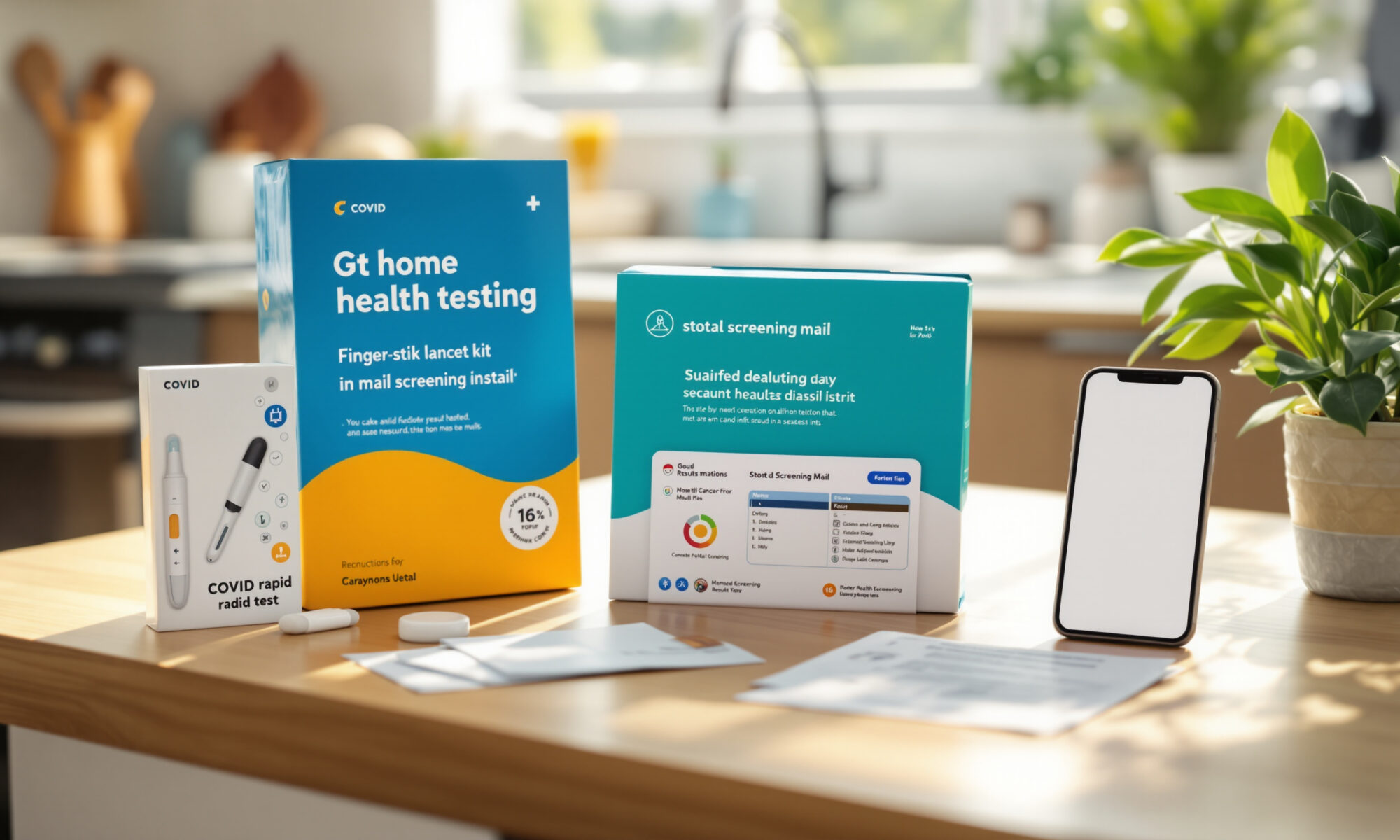
At home health test kits are worth it when they answer a clear medical question and use a validated sample, such as pregnancy, COVID-19, HIV, blood glucose, A1C, cholesterol, or stool-based colon cancer screening. They’re weaker when they promise broad wellness insights from hormones, food sensitivity panels, or gut microbiome profiles. The key test is simple: will the result change what you do next?
At home health test kits with real clinical value
The best at home health test kits are not glamorous. They measure something doctors already use, with a result that can lead to a specific next step. A positive pregnancy test leads to prenatal care. A high A1C can trigger a diabetes evaluation. A positive stool blood test means you need a colonoscopy, not another home kit.
COVID-19 changed public comfort with self-testing, and it also showed the limits. Rapid antigen tests are useful when you have symptoms and need a same-day answer, but a negative result early in infection can miss cases. The CDC’s 2024 guidance still advises repeat testing when symptoms or exposure make infection likely.
Some home testing belongs squarely in health technology, not wellness shopping. If you want a broader view of how devices and apps are changing care, our coverage of the future of health care technology explains why access and accuracy have to move together.
Which tests are worth it, questionable, or mostly hype?
A useful home test has three traits: the sample is easy to collect correctly, the lab method is standard, and the result has an accepted medical meaning. That’s why a home A1C test can be useful for some people, while a “metabolism age” panel is often just dressed-up marketing.
Here’s the practical comparison. “Worth it” doesn’t mean perfect. It means the test can reasonably support a health decision when used in the right setting.
| Test type | Typical sample | Clinical value | Key caveat |
|---|---|---|---|
| Pregnancy test | Urine | High value; detects hCG after missed period | False negatives more likely before day 1 of missed period |
| COVID-19 antigen test | Nasal swab | High value for symptomatic same-day decisions | CDC 2024: repeat after 48 hours if negative and suspicion remains |
| HIV self-test | Oral fluid or finger-stick blood | High value for screening | Window period can be up to 90 days depending on test type |
| A1C test | Finger-stick blood | Useful for diabetes risk monitoring | General diabetes cutoff is 6.5% or higher, but diagnosis needs clinical follow-up |
| Cholesterol panel | Finger-stick blood | Useful if lab-certified and repeated over time | LDL targets depend on age, heart risk, and medical history |
| FIT colon cancer screen | Stool | High value for adults in screening age groups | Positive result requires colonoscopy; not a diagnosis |
| Thyroid TSH test | Finger-stick blood | Sometimes useful when symptoms are present | TSH reference ranges vary; abnormal results need repeat lab testing |
| Food sensitivity IgG panel | Finger-stick blood | Low value for diagnosing intolerance | AAAAI and other allergy groups warn IgG often reflects exposure, not disease |
| Gut microbiome test | Stool | Low to uncertain value for most healthy adults | No agreed clinical target for an “ideal” microbiome in 2026 |
| Broad hormone panel | Saliva, urine, or blood spot | Mixed value, depending on the hormone | Timing, menstrual cycle, medication, and pregnancy can distort results |
How accurate are home tests compared with lab tests?
Accuracy depends less on the word “home” than on the test method. A CLIA-certified laboratory processing a mailed blood spot is different from a phone app interpreting a color strip on your bathroom counter. Collection errors, heat during shipping, expired kits, and testing too early are common reasons good tests produce bad answers.
For COVID-19, rapid antigen tests are generally more specific than sensitive. In plain English: a positive result is often meaningful, but a negative result can be wrong, especially early. A 2023 Cochrane review of rapid antigen tests found performance varied by brand, symptoms, and timing, which is exactly why repeat testing matters.
Blood-based at home health test kits can be useful, but finger-stick samples are small and easier to contaminate or underfill. If a result is unexpected, don’t build a life plan around one number. Confirm it through your primary care clinician or a standard lab, especially if you have symptoms, are pregnant, take prescription medication, or manage a chronic condition.
Devices are improving fast, but good technology still needs good interpretation. Our guide to health and wellness technologies makes the same point: the measurement is only useful if it helps you make a safer decision.
When a kit can save time, money, or embarrassment
Some people use at home health test kits because they can’t easily get an appointment, don’t have paid time off, or feel embarrassed discussing sexual health. That matters. Better access is not a small benefit when the alternative is no test at all.
HIV self-testing is a good example. The World Health Organization has supported HIV self-testing as a way to reach people who might not use clinic-based testing, while still emphasizing confirmatory testing after a reactive result. Home sexually transmitted infection panels can also help, though their value depends on whether they test the right sites, such as throat or rectal swabs when relevant, not just urine.
Colon cancer screening is another strong case. The U.S. Preventive Services Task Force recommended in 2021 that adults at average risk start colorectal cancer screening at age 45. Stool-based tests such as FIT are legitimate screening tools, but the deal is non-negotiable: a positive home stool test must be followed by colonoscopy.
If you’re tracking caffeine intake because of palpitations, anxiety, sleep problems, or high blood pressure, a home lab test usually won’t answer the main question. A more practical first step may be estimating your intake from drinks, as explained in our guide on measuring caffeine in coffee.
The tests I’d be cautious about
Gut microbiome tests are the biggest gray zone. Research on the microbiome is scientifically serious, but consumer reports often jump from “your bacteria differ from a reference group” to diet advice that hasn’t been tested in clinical trials. Honestly, the evidence here is thinner than the marketing suggests.
Food sensitivity panels deserve similar caution. IgE allergy testing can help diagnose true allergy when matched to a history of reactions. IgG food panels are different. The American Academy of Allergy, Asthma & Immunology has warned for years that IgG results often show that you’ve eaten a food, not that it’s harming you.
Hormone kits can be helpful in narrow cases, but broad panels are easy to misread. Cortisol changes by time of day. Reproductive hormones vary across the menstrual cycle. Testosterone results depend on timing and lab method. A single “low” or “high” marker may say more about collection timing than disease.
Vitamin and nutrient testing sits in the middle. Vitamin D, B12, and iron studies can be clinically useful for people with risk factors or symptoms. A dozen-marker “wellness deficiency” panel for a healthy person often creates more noise than clarity, and abnormal borderline results can lead to unnecessary supplements or repeat testing.
How to choose at home health test kits safely
Before buying, slow down. The question is not “Can I measure this?” It’s “What will I do if the result is abnormal?” That one question filters out a surprising amount of waste.
- Choose kits that name the laboratory and say whether it is CLIA-certified in the United States or accredited under an equivalent national system.
- Check whether the test is FDA-authorized, FDA-cleared, or sold as a laboratory-developed test; those are not the same category.
- Read the collection rules before ordering, including fasting, time of day, menstrual cycle day, medication restrictions, and shipping deadline.
- Avoid tests that promise to diagnose vague symptoms such as fatigue, brain fog, bloating, or “inflammation” from one broad panel.
- Plan the follow-up before you test, especially for HIV, hepatitis, colon cancer screening, abnormal blood sugar, thyroid results, or pregnancy.
Privacy also deserves attention. Some companies sell de-identified data for research or commercial use, and genetic or microbiome data can be harder to treat as ordinary shopping information. Read the consent and data-sharing terms, not just the price.
Cost is the other overlooked caveat. A $99 cholesterol kit may be reasonable if you lack local access, but many insured patients can get the same panel at a lower out-of-pocket cost through routine care. For most people, this matters less than repeatable basics: blood pressure, sleep, movement, smoking status, and age-appropriate screening.
FAQ
Are at home health test kits as accurate as doctor-ordered tests?
Some are close when a certified lab processes the sample, but collection and shipping errors are more common at home. Any unexpected or serious result should be confirmed through standard medical care.
Which at home health test kits are most worth buying?
Pregnancy, COVID-19 antigen, HIV screening, A1C, cholesterol, and stool-based colon cancer screening kits have the strongest practical value when used for the right person at the right time.
Are gut microbiome tests useful for choosing a diet?
Usually not in a clinical sense. Microbiome science is advancing, but most consumer reports do not have enough trial evidence to prescribe a personalized diet reliably.
Can a home test diagnose diabetes?
A home A1C or glucose result can flag risk, but diabetes diagnosis should be confirmed by a clinician using accepted criteria and repeat testing when needed.
Should I use a home hormone test for fatigue?
Be cautious. Fatigue has many causes, and hormone results can shift with timing, stress, sleep, cycle phase, and medication, so a clinician-guided workup is usually more useful.
{“@context”:”https://schema.org”,”@type”:”FAQPage”,”mainEntity”:[{“@type”:”Question”,”name”:”Are at home health test kits as accurate as doctor-ordered tests?”,”acceptedAnswer”:{“@type”:”Answer”,”text”:”Some are close when a certified lab processes the sample, but collection and shipping errors are more common at home. Any unexpected or serious result should be confirmed through standard medical care.”}},{“@type”:”Question”,”name”:”Which at home health test kits are most worth buying?”,”acceptedAnswer”:{“@type”:”Answer”,”text”:”Pregnancy, COVID-19 antigen, HIV screening, A1C, cholesterol, and stool-based colon cancer screening kits have the strongest practical value when used for the right person at the right time.”}},{“@type”:”Question”,”name”:”Are gut microbiome tests useful for choosing a diet?”,”acceptedAnswer”:{“@type”:”Answer”,”text”:”Usually not in a clinical sense. Microbiome science is advancing, but most consumer reports do not have enough trial evidence to prescribe a personalized diet reliably.”}},{“@type”:”Question”,”name”:”Can a home test diagnose diabetes?”,”acceptedAnswer”:{“@type”:”Answer”,”text”:”A home A1C or glucose result can flag risk, but diabetes diagnosis should be confirmed by a clinician using accepted criteria and repeat testing when needed.”}},{“@type”:”Question”,”name”:”Should I use a home hormone test for fatigue?”,”acceptedAnswer”:{“@type”:”Answer”,”text”:”Be cautious. Fatigue has many causes, and hormone results can shift with timing, stress, sleep, cycle phase, and medication, so a clinician-guided workup is usually more useful.”}}],”@id”:”https://www.healthylifevitality.com/?p=2572/#faq”}